close

Hayden Seth

Slots

How to Set a Realistic Session Bankroll for Slots

Most casino visitors approach a slot machine with an arbitrary figure in mind, usually whatever amount of cash happens to sit in their wallet or whatever round number feels comfortable to withdraw from the lobby ATM. Within forty-five minutes, that money has vanished into the bill validator, leaving the player bewildered by how quickly a casual evening turned into an expensive lesson.
The disconnect rarely stems from bad luck alone. It happens because players evaluate their bankroll in static dollar amounts rather than measuring it against the mechanical realities of modern slot machines. Setting a realistic session bankroll requires understanding spin velocity, mathematical volatility, and the fundamental difference between capital preservation and entertainment spending.

Understanding Spin Velocity and the Cost of Time

Slot machines are among the fastest gambling formats ever designed. Unlike table games, where hand shuffling, chip sorting, and dealer payouts create natural pauses, modern video slots operate at an unrelenting tempo. An average player comfortably logs 500 to 700 spins per hour, and someone utilizing turbo spin modes or rapidly tapping the stop button can easily exceed 900 spins in that same sixty-minute window.
This velocity means that small wagers multiply into astronomical turnover in a remarkably short span. If you wager two dollars per spin and maintain a standard pace of 600 spins per hour, you are putting $1,200 of total coin-in through the machine every sixty minutes.
Even with a relatively generous theoretical return to player (RTP) of 92% to 96%, the house edge is actively shaving fractions off that churn on every single cycle. When setting a budget, you cannot evaluate a two-dollar wager as an isolated gamble. You must view it as an hourly operational cost. If your total session budget is only one hundred dollars, that two-dollar wager gives you an expected lifespan of barely twenty to thirty minutes before normal statistical variance exhausts your funds.

Separating Total Bankroll from Single-Session Capital

A common mistake among recreational gamblers is treating their overall casino budget as a single, liquid pool of money. When these boundaries blur, bad runs bleed into future sessions, turning a momentary slump into a financial headache.
A healthy gambling structure operates on a tiered system. Your total bankroll represents discretionary money earmarked entirely for entertainment over an extended timeline, such as a full vacation, a month, or an entire year. Under no circumstances should this money compete with mortgage payments, savings goals, or grocery bills.
Your session bankroll should represent a conservative fraction of that master pool, ideally no more than 10% to 20% for any single sitting. Dividing your funds into distinct silos creates an artificial circuit breaker. If an aggressive cold streak consumes your afternoon session allocation, having a hard boundary prevents you from dipping into the evening funds or tomorrow’s budget. It forces a mandatory cooling-off period, preserving both your capital and your emotional equilibrium.

Sizing Your Bankroll by Game Volatility

Not all slot titles consume cash at the same rate. Two machines sitting side by side with identical ninety-six percent payback figures can offer wildly divergent gameplay experiences based entirely on variance. Sizing your session bankroll without checking the game’s volatility rating is a recipe for premature elimination.

Low to Medium Volatility Machines

Low-volatility titles are programmed to distribute payouts frequently, though most of those returns hover around or slightly below your initial wager. These games provide a defensive, cushioned experience designed to extend your time on device.
For low to medium volatility games, a realistic safety margin is 100 to 150 base bets. If your standard bet is $1.50, an appropriate session bankroll sits between $150 and $225. Because these titles routinely return small wins that replenish your balance, this ratio gives you enough statistical runway to weather moderate dry spells and enjoy a relaxed, extended session.

High and Extreme Volatility Slots

High-volatility titles, particularly modern games packed with progressive mechanics, multi-tiered multipliers, and expansive bonus buy options, operate on a feast-or-famine model. These machines withhold significant portions of their theoretical return to fund massive top-end payouts and high-paying bonus features. You will routinely encounter stretches of twenty, thirty, or forty consecutive dead spins.
Surviving on a high-volatility machine demands a significantly wider financial buffer, typically 250 to 400 base bets. Attempting to play a volatile game at three dollars per spin with a two-hundred-dollar budget is essentially buying a lottery ticket with terrible odds. You will almost certainly deplete your credits long before the game cycles into a bonus feature that restores your balance. Matching your bet size downward to preserve that essential 300-spin cushion is the only way to give the mathematical variance room to breathe.

A Practical Calculation Framework

Before inserting your first bill or voucher, take thirty seconds to run a simple four-step formula that anchors your money in time:
First, determine your target duration. How long do you actually want to play during this specific sitting? A standard casino session usually runs between one and two hours.
Second, estimate your hourly spin count. A conservative baseline for most recreational players is 500 spins per hour.
Third, select your target bet size based on the denomination and paylines you prefer.
Finally, multiply your intended hours by your spin rate, multiply that result by your bet size, and discount it by an assumed hit rate based on volatility. A practical rule of thumb is calculating the absolute worst-case scenario: ensure your starting session cash equals at least 30% of your total projected hourly coin-in for low-variance titles, and at least 50% for high-variance titles.
If you want to play for two hours at one dollar per spin on a medium-variance machine, you are projecting roughly 1,000 total spins, representing $1,000 in total turnover. Anchoring your session buy-in at $250 to $300 ensures you can absorb an early downswing without being forced off the machine before your planned time expires.

Establishing Non-Negotiable Exit Thresholds

A realistic session bankroll is meaningless without rigid operational rules governing how you leave the chair. The casino environment is explicitly designed to dissolve your awareness of time and money, making pre-session boundaries vital.
Establish a firm loss limit that matches your session allocation exactly. If you sit down with two hundred dollars and the balance reaches zero, the session is over. Leaving the floor, taking a walk, or grabbing a meal breaks the trance and prevents the catastrophic habit of chasing losses with secondary ATM runs.
Equally important is defining a clear win goal. Slot machines are negative-expectation games over long horizons; the longer you keep money cycling through the reels, the closer your actual return moves toward the mathematical house edge. If you hit a fortunate bonus early and double your initial session bankroll, print the voucher. Pocket your original stake, lock it away, and proceed only with a designated portion of house winnings. Taking your profits off the layout is the only reliable way to walk out of the casino a winner.

read more
Online Casino

Can two casino crypto games with identical RTP produce different session outcomes?

Two casino crypto games with identical RTP can produce substantially different session outcomes because RTP measures the long-run return average, while volatility determines how that return is distributed across individual sessions and round samples. A high volatility game and a low volatility game sharing identical 97 percent RTP at compatible operators produce the same long-run return expectation across millions of rounds but generate entirely different session outcome distributions across the short and medium round counts that funded sessions realistically cover. Learning why identical RTP games produce different session outcomes gives players at casino crypto games compatible operators the framework to select configurations whose outcome distribution matches their session approach at compatible operators.

Volatility as the differentiating factor

Volatility measures how spread the return distribution is across a session sample, with high volatility games concentrating return into rare large win events and low volatility games distributing return across frequent smaller wins. Two games sharing 97 percent RTP at compatible operators can carry entirely different volatility levels that produce completely distinct session outcome profiles despite their identical long-run return expectation at compatible operators.

Hit frequency works alongside volatility at compatible operators to determine how often winning outcomes appear within any given session spin count. A high volatility low hit frequency game at compatible operators may produce winning outcomes on eight percent of spins while a low volatility high hit frequency game produces winning outcomes on forty percent of spins, with both games carrying the same 97 percent RTP across their full long-run return distribution at compatible operators.

How variance levels shape session distribution?

Variance levels at compatible operators shape session outcome distribution across two distinct patterns that each reflect a different return concentration approach from the same underlying RTP figure.

  • High volatility distribution

High volatility games at compatible operators concentrate a larger proportion of total return into rare large win events whose infrequency means many sessions conclude with outcomes well below the expected return, while occasional sessions produce returns substantially above it. Players who run one hundred sessions on a high volatility 97 percent RTP game at compatible operators observe a wide outcome distribution where session results span a broad range above and below the expected return at compatible operators.

  • Low volatility distribution

Low volatility games at compatible operators distribute return across frequent smaller wins whose regularity produces session outcomes that cluster more tightly around the expected return than high volatility alternatives generate from the same round count. Players who run one hundred sessions on a low volatility 97 percent RTP game at compatible operators observe a narrower outcome distribution where session results track the expected return more closely across the full sample at compatible operators.

Configuration selection by session approach

Players who select between identical RTP games at compatible operators based on volatility awareness choose the outcome distribution that suits their session approach rather than their long-run return expectation, which remains identical across both configurations. Players whose session approach prioritises consistent outcomes across multiple sessions select low volatility configurations at compatible operators, while players whose approach accepts wide session outcome variation in exchange for occasional high-return events select high volatility configurations at compatible operators.

Two identical RTP games can produce different session outcomes because volatility determines return distribution, with high volatility concentrating return into rare large events and low volatility distributing return across frequent smaller wins at compatible operators.

read more
Poker

Chopping a Poker Tournament: Avoiding Taxes on Opponent Winnings

Reaching the final table of a major poker tournament is an exhilarating, exhausting experience. After days of navigating landmines, dodging bad beats, and nursing short stacks, the remaining players often reach a common conclusion: the variance is brutal, the payout jumps are steep, and making a deal makes financial sense.
Whether using an Independent Chip Model (ICM) calculation or agreeing to an even split, chopping the prize pool is a time-tested strategy to lock in guaranteed profit. Yet far too many players celebrate a negotiated settlement only to face an expensive disaster come tax season.
If you agree to a chop carelessly, you can easily end up legally responsible for paying income tax on tens of thousands of dollars that walked out the casino doors in someone else’s pocket. Navigating the intersection of tournament mechanics and tax compliance is essential to ensure your hard-earned score stays in your bank account.

The Ghost Income Trap: How Handshake Deals Go Wrong

In the United States, casinos must report tournament winnings to the Internal Revenue Service whenever a player’s net profit exceeds $5,000. When that threshold is crossed, the casino cage generates an IRS Form W-2G (Certain Gambling Winnings) in the name of the player who officially finishes in that payout slot.
The danger arises when players orchestrate an informal or unofficial chop. Consider a common scenario: two players reach heads-up play in a tournament where first place pays $80,000 and second place pays $40,000. Exhausted and facing equal chip stacks, both players agree to an even split of $60,000 each.
However, suppose the poker room enforces a strict policy prohibiting official chops. To bypass this, the players agree to play one blind hand, or one player simply concedes. The nominal winner steps up to the cashier cage, signs the paperwork for the first-place payout of $80,000, receives the cash, and immediately hands $20,000 in hundred-dollar bills to their opponent in the parking garage.
On paper, the winner just made a catastrophic financial mistake. The casino reports $80,000 of gross gambling income under that player’s Social Security number. Come April, the IRS expects taxes on the entire $80,000. The $20,000 passed to the opponent does not simply vanish from the winner’s tax return. Depending on the player’s tax bracket, federal and state income taxes on that phantom $20,000 could easily total $6,000 to $9,000. The player took home $60,000 in gross cash but paid taxes on $80,000, effectively paying the opponent’s tax bill.

The Ideal Scenario: House-Sanctioned Chops

The cleanest way to avoid this trap is to compete only in rooms that permit official, house-facilitated deals. Many reputable cardrooms and casino circuits allow players to pause the clock, request the tournament director, and calculate an official payout revision.
When a venue facilitates an official chop:
  • The tournament staff prints modified payout slips reflecting the agreed-upon amounts.
  • Each player signs for their exact negotiated payout at the cage.
  • The casino issues distinct Form W-2G documents to each participant based solely on the money they actually received.
Before you invest serious hours into a tournament, ask the floor staff about the venue’s policy on final table negotiations. Some jurisdictions and tribal gaming compacts forbid modifying posted payouts under any circumstances, while others leave it entirely up to player consensus. Knowing the venue’s stance beforehand dictates your negotiating leverage when you reach the final table.

The Legal Lifeline: IRS Form 5754

If a cardroom refuses to adjust the official tournament payouts on their software, players are not entirely out of options. The federal government provides a specific administrative mechanism for shared gambling winnings: IRS Form 5754 (Statement by Person(s) Receiving Gambling Winnings).
Form 5754 is designed for situations where one individual receives gambling winnings that belong, in whole or in part, to one or more other individuals. While commonly utilized by lottery pools, it applies directly to split poker winnings.
When presenting yourself at the casino cage after an unadjusted payout, the nominal winner can complete Form 5754 before any funds are disbursed.

How Form 5754 Protects You

The person whose name is attached to the winning seat acts as the nominal recipient on Part I of the form. Part II lists the names, addresses, Social Security numbers, and exact dollar portions belonging to each other party in the agreement.
Once Form 5754 is signed and submitted, the casino cage does not issue a single monolithic W-2G. Instead, the casino is required to generate separate W-2G forms for every individual listed, dividing the reported income and any applicable mandatory tax withholding according to the breakdown provided.
This process completely insulates the nominal winner from ghost income. The IRS receives documentation showing exactly who received what, matching the paper trail directly to the actual distribution of funds.

Why Private Payouts and Peer Transfers Are Dangerous

When a casino cage staff refuses to process Form 5754—often due to untrained personnel or strict internal cage policies—players frequently resort to private settlements via personal checks, bank wires, or cash transfers. Doing so introduces severe administrative headaches.
If you sign for the full first-place payout on a W-2G and transfer funds privately, you cannot simply write off the payout on your individual tax return as an informal deduction. To legally offset that reported income, you would generally need to issue an IRS Form 1099-MISC or Form 1099-NEC to your opponent.
Issuing a 1099 requires obtaining your opponent’s full legal name, physical address, and Taxpayer Identification Number via a signed Form W-9 before handing over the money. In the chaotic atmosphere of a late-night casino victory, collecting verified tax forms from an eager opponent is nearly impossible. If that opponent takes the cash and vanishes without providing valid documentation, you remain fully liable for the gross amount on your W-2G.
Furthermore, moving tens of thousands of dollars through peer-to-peer payment platforms or personal bank accounts can trigger automated anti-money laundering alerts and bank inquiries, compounding your headaches.

Final Table Guidelines to Protect Your Bottom Line

When the prospect of a tournament deal arises, approach the negotiation with the same analytical discipline you bring to hand reading:
  • Inquire early: Ask the tournament director about house chop rules and Form 5754 accommodations before negotiations begin.
  • Verify identities: Never agree to a shared payout arrangement with an anonymous player or someone unwilling to provide formal identification to casino staff.
  • Watch for foreign players: Non-resident aliens are often subject to mandatory 30% flat withholding on tournament winnings. A deal that fails to account for disparate tax withholding rates between domestic and international players will result in a lopsided financial outcome.
  • Be willing to play it out: If the venue refuses to process individual tax documents and your opponent will not provide the necessary information for private compliance, walk away from the deal. Absorbing thousands of dollars in another person’s tax liability quickly destroys whatever equity you hoped to preserve by chopping.
Winning a tournament requires strategic focus, but preserving your bankroll requires tax literacy. Protect your profits by demanding proper documentation before any handshakes are finalized.
read more
Online Casino

How Live Dealer Games Bring Casino Experiences Online

For the first two decades of internet gambling, digital table games felt largely like solitary video arcade sessions. You placed a virtual chip on a flat green graphic, clicked a button, and watched a pre-rendered software sequence dictate the outcome via a random number generator. While the underlying mathematical odds matched those found in Las Vegas or Atlantic City, the soul of the game was absent. There was no gentle click of a ceramic ball dancing across roulette frets, no satisfying scrape of playing cards leaving a manual shoe, and no dealer banter to cut the tension after a brutal beat.
The introduction of live dealer streaming permanently closed that experiential divide. By blending brick-and-mortar casino craft with low-latency streaming architecture, live gaming transformed remote wagering from an isolated computational exercise into a living, breathing entertainment format. Today, players do not merely bet on software; they pull up a virtual chair at a physical felt table, look an actual human croupier in the eye, and participate in the authentic rhythm of casino gaming from their own living rooms.

Overcoming the Skepticism of the Digital Shuffle

At the core of the live dealer revolution lies a fundamental psychological shift around player trust. Even though licensed digital casinos utilize certified random number generators that undergo rigorous third-party testing, mathematical algorithms inherently lack transparency to the naked eye. An unlucky streak on an animated blackjack game often leaves casual and seasoned gamblers alike harboring quiet doubts about fairness, simply because the unseen code operates behind an opaque user interface.
Live dealer broadcasts eliminate that cognitive friction through pure visual accountability. When players watch a shoe cut by hand, cards dealt face-up from a clear perspex prism, or a physical marble dropped into a spinning mahogany wheel, their skepticism evaporates. Physical reality offers an intuitive form of verification that no cryptographic certificate can match. Watching the natural physics of a bouncing roulette ball or the precise physical mechanics of a multi-deck shuffle establishes immediate credibility, allowing participants to focus on strategy and enjoyment rather than questioning the integrity of the software.

The Technological Symphony Behind the Felt

Delivering a seamless physical gaming session over fiber-optic cables requires far more than setting up a basic webcam in front of a blackjack table. The entire live dealer ecosystem relies on specialized technical components engineered to bridge physical actions and digital transactions in fractions of a second.

Optical Character Recognition and Instant Data Capture

The foundational backbone of modern live dealer studios is Optical Character Recognition, commonly known as OCR. Tiny, high-resolution cameras embedded above and around the table scan every card, wheel pocket, and physical marker the microsecond it appears.
When a dealer pulls an ace of spades from the shoe, the OCR system reads the micro-identifiers on the card faces instantly, transmitting that data to the player interface. The software updates the digital heads-up display, calculates payout ratios, and applies split or double-down mechanics in real time without the dealer needing to manually enter results. This seamless bridge between tangible props and instant balance adjustments gives players the tactile satisfaction of physical equipment paired with the blistering efficiency of digital cashier systems.

Purpose-Built Studio Architecture

Unlike standard casino pits that are noisy, crowded, and plagued by inconsistent lighting, dedicated broadcast studios are purpose-built production environments. Operators design these spaces using broadcast-grade LED panels, acoustic baffles, and multi-angle 4K camera arrays.
These setups grant players perspectives they rarely enjoy in a brick-and-mortar facility. During a live roulette spin, camera feeds dynamically switch from a wide studio view to a cinematic slow-motion close-up of the ball dropping into the winning pocket. In baccarat, specialized card-squeeze tables use macro lenses beneath glass cutouts, recreating the dramatic ritual of slowly bending cards to reveal their pips. The end product often delivers higher production value and clearer visibility than standing three people deep behind a crowded physical table on a Friday night.

Restoring the Social Texture of the Pit Floor

Gambling has always been an inherently social endeavor. The energy of a packed craps table, the collective groan when a dealer draws out a six-card twenty-one, and the lighthearted conversation between rounds provide much of the entertainment value that draws people to resort destinations.
Live dealer games deliberately restore this human element through integrated live chat functionality. Players can speak directly with the dealer, ask gameplay questions, or exchange friendly banter after an exciting run. Highly trained croupiers undergo specialized academy training that emphasizes camera presence, professional etiquette, and interpersonal charisma alongside traditional manual dexterity. They read screen names, congratulate winners, acknowledge regular patrons, and steer table discussions with the same hospitality found in top-tier VIP lounges.
Crucially, this social interaction remains low-pressure. Players enjoy the warmth and companionship of a shared table without the awkwardness of physical proximity, smoke-filled air, or unwanted commentary from unruly neighbors. It strikes a rare equilibrium between welcoming hospitality and personal privacy.

Redefining Accessibility for the Modern Player

The ultimate triumph of live dealer formats is how effortlessly they remove the logistical friction associated with traditional brick-and-mortar gambling. Visiting a physical casino typically requires planning: arranging travel, booking hotel accommodations, navigating crowded gaming floors, and complying with table minimums driven sky-high by resort overhead costs.
Online live studios democratize that entire experience. A player can log in on a desktop computer or mobile phone and find twenty-four-hour availability across standard table limits, flexible side bets, and niche rule variations that regional casinos rarely offer. Whether you are placing five-dollar hands on a classic blackjack shoe or participating in high-stakes salon tables featuring personalized private dealers, the barriers to entry drop away completely.
By synthesizing the warmth, transparency, and theatricality of real-world tables with the speed and convenience of internet access, live dealer gaming has achieved something remarkable. It has taken the timeless allure of the casino floor and made it a living, accessible reality for anyone with a screen and an internet connection.
read more
Card Game

The Etiquette of Trading High-Value Pokémon Cards with Kids

Walk into any local game store during an open play event, and you will witness two entirely different economies operating on the exact same felt mats. On one side sit seasoned collectors discussing centering, raw condition grades, and market trends. On the other side sit young fans trading based on visual flair, holographic foil patterns, and how much they love a specific character.
The collision of these two worlds has become common. Modern expansions contain individual chase cards worth several hundred dollars, and children pull them straight from supermarket blister packs every week. When an adult or seasoned collector sits across the table from a young player holding a significant asset, normal trade etiquette is no longer sufficient. Navigating these interactions requires an ethical framework rooted in transparency, patience, and genuine care for the hobby’s future.

The Modern Disconnect Between Value and Sentiment

For an experienced collector, card value is rooted in cold data: historical sales, rarity tiers, grading submission numbers, and liquid cash pricing. For a child, value is almost entirely emotional and sensory. A ten-year-old might treasure an alternate-art card featuring an iconic monster simply because the illustration looks exciting, entirely oblivious to the fact that adult buyers are paying three hundred dollars for that exact cardboard rectangle online.
This gap creates an immediate ethical imbalance. In collector circles, taking advantage of a naive player is known as sharking. While manipulating any novice is frowned upon, doing so against a child is outright predatory. The cardinal rule of trading with young collectors is recognizing that superior knowledge does not confer a right to exploit. If a transaction feels lopsided because the other party lacks the developmental maturity to understand financial markets, proceeding with that deal is a breach of community trust.

The Guardian Rule: Involving Parents from the Start

Before a single binder is examined or a card changes hands, identify who is supervising the child. If a trade involves cards carrying meaningful financial value, an adult guardian must be brought into the conversation immediately.
Never conduct a high-stakes trade in a corner while a parent is browsing down another aisle or waiting out in the car. Approach the parent politely, explain what card their child has, and clearly state what that card represents in the secondary market. Many parents assume Pokémon cards still cost roughly the same as they did decades ago, viewing them merely as five-dollar playthings.
When you bring a parent to the table, explain the dynamics clearly:
  • State the current market value of the child’s card based on real-time sales data.
  • Explain why the card commands that price, whether due to rarity, art style, or tournament viability.
  • Clarify what you are offering in return and verify that the parent understands the financial balance of the exchange.
Involving parents protects everyone involved. It eliminates the risk of buyer remorse, shields you from accusations of dishonesty, and ensures the family makes an informed decision about an item that belongs to their household.

The Trap of Quantity Over Quality

Children naturally evaluate trades through a lens of visual abundance. To a young collector, giving up one card to receive ten shiny cards can feel like an incredible victory. Less scrupulous hobbyists often exploit this cognitive tendency by dumping bulk ultra-rares, standard holo foils, or low-tier promotional cards in exchange for a single high-tier chase card.
Even if a child eagerly accepts such an arrangement, offering it remains unethical. Handing over five ten-dollar cards for a single two-hundred-dollar card is not a negotiation; it is exploitation masked as mutual agreement.
If a young collector expresses a desire for multiple cards rather than one expensive piece, you have an obligation to construct a trade that maintains proportional equity. Walk them through the math. Show them that while having more cards feels rewarding in the moment, their single card represents substantial trading power that should not be surrendered lightly.

Educating on Value and Preservation in Real Time

Trading sessions with kids present an opportunity for mentorship. Rather than keeping price verification behind your own phone screen, turn the device around and let the child look at the data with you.
Show them how to look up completed sales rather than inflated asking prices. Explain what near-mint condition means, and show them how corner dings, edge whitening, and surface scratches reduce liquidity. If their valuable card is floating loose in a pocket or jammed unsleeved into a rigid plastic binder, give them a penny sleeve and a top loader right there at the table.
Teaching a young collector how to protect their card builds their confidence and teaches them how to engage with the hobby responsibly. They learn that their possessions have tangible worth, that careful handling matters, and that the community is populated by adults who want to help them succeed rather than take their best pulls.

Knowing When to Walk Away

There are moments when the only ethical move is declining the trade altogether. If a child seems unsure, if they are trading a card gifted by a relative, or if they appear swayed solely by the excitement of the moment, step back.
Children frequently experience acute regret after parting with a card they spent months hunting. If you sense that the young collector is attached to the artwork or will wake up tomorrow morning upset that their favorite monster is gone, tell them to keep it. Advise them to sleep on the decision, talk it over with their family, and bring it back the following week if they still want to make the swap.
Walking away from an advantageous deal might feel counterintuitive to someone conditioned by aggressive secondary markets. However, local game stores and card leagues survive entirely on community goodwill. A child who feels respected and protected grows up to become an active, honorable participant in the hobby for decades to come.
read more
Betting

Cricbet99 ID Sharing Risks: Why You Should Never Do It

Sharing your betting account credentials might seem harmless in some contexts — letting a friend try the platform or helping a family member place a bet. But it carries risks that are far more serious than most users realise. Cricbet99 operates under a strict one-account-per-person policy, and sharing your ID — whether intentionally or carelessly — can result in consequences that affect your account, your finances, and your ability to use the platform.

Risk 1: Complete Loss of Account Control

When you share your Cricbet99 ID and password with someone else, you hand them full control of your account. They can place bets in your name, deposit funds, withdraw your balance, change your contact details, and even alter your password to lock you out permanently.

There is no technical way to give someone partial account access. Sharing your credentials is an all-or-nothing action with no safeguards against misuse. Even with trusted individuals, this represents an enormous and unnecessary risk.

Risk 2: Financial Theft

Your account is directly linked to your payment methods. Someone with access to your account can initiate withdrawals to their own accounts if the payment methods attached support it, or they can place reckless bets that deplete your balance.

When account sharing is involved, the platform’s ability to reverse fraudulent transactions is significantly limited because the activity was conducted using your legitimate credentials. You entered the risk voluntarily.

Risk 3: Platform Policy Violation

Sharing accounts is explicitly against Cricbet99’s terms of service. If the platform detects that your account is being accessed from multiple devices, different locations, or in patterns inconsistent with a single user, it may investigate and suspend or permanently close the account.

A closed account means loss of any remaining balance, active bonuses, and Club membership status. The consequences of violating the one-account-per-person policy are irreversible and disproportionate to whatever short-term convenience the sharing was meant to provide.

Risk 4: Liability for Others’ Behaviour

If the person you share your account with places bets that violate platform rules, engages in fraudulent deposit activity, or otherwise breaches terms, the account holder — you — is responsible. Infractions committed through your account are attributed to your account, regardless of who was actually operating it.

This could result in your account being flagged, restricted, or permanently banned based on behaviour you did not personally engage in.

Risk 5: Tax and Regulatory Implications

Betting winnings may have tax implications in India depending on the amount and circumstances. If someone else uses your account and wins significant amounts, those winnings are associated with your identity and registered tax details. This creates potential complications you are not in control of.

Risk 6: Identity-Based Security Erosion

Your Cricbet99 ID is linked to your identity documents through the verification process. When someone else uses your account, the boundary between your verified identity and their activity becomes blurred. In cases where platform investigations or regulatory inquiries arise, demonstrating that account activity was not your own becomes extremely difficult once credentials were shared.

How to Protect Against Accidental Sharing

Never store your credentials in shared locations like notes apps visible to others, group chat messages, or on devices you do not solely control. Use a password manager to ensure your credentials are stored securely and are not accidentally seen.

If you have ever shared your credentials in the past, change your password immediately and review your account activity for any unauthorised transactions.

For guidance on building strong account security habits that prevent both intentional and accidental sharing risks, Cricbet99 Club members in particular should prioritise account security given the enhanced balance and bonus access associated with Club membership.

FAQ

Is it ever acceptable to share my Cricbet99 ID with someone? No. Account sharing is against platform policy and exposes you to serious financial and account security risks regardless of who the other person is.

What should I do if I have already shared my credentials? Change your password immediately. Review your account activity for any unrecognised transactions and contact support if you notice anything suspicious.

Can the platform detect if my account is being shared? Yes. Multi-device access, geographic inconsistencies, and unusual activity patterns are all signals that the platform’s security systems monitor.

What happens to my Club membership if my account is suspended for sharing? Club membership and any associated balance or bonuses are forfeited if the account is suspended or closed due to terms violations.

What if a family member wants to bet on the same platform? Each person needs to create their own individual account. The platform’s terms require each account to be associated with a single verified individual.

Can I be prosecuted for activity conducted through my account by someone else? While criminal liability would depend on specific circumstances, you are contractually responsible for all activity conducted through your account under the platform’s terms of service.

read more
Betting

ReddyBook: Your Ultimate Guide to Safe and Exciting Cricket Betting

We’ve covered a lot of ground—strategies, markets, mistakes, bonuses, tracking, and just about everything else you need to know about IPL betting. But let’s step back for a moment and talk about the bigger picture: what actually makes cricket betting worthwhile, how to do it safely, and how Reddybook fits into your overall approach to enjoying India’s greatest sporting spectacle.

The Real Appeal of Cricket Betting

Let’s be honest about why people bet on cricket. It’s not primarily about the money, though profits are nice when they happen. It’s about engagement.

Watching IPL is fun. Watching IPL with stakes on the outcome is more fun. Every boundary matters when you’ve bet on high scoring totals. Every wicket creates tension when you’ve backed the bowling team. The intellectual challenge of analyzing matchups and testing your cricket knowledge against the market creates satisfaction beyond just watching passively.

This is entertainment, not investment. The moment you start thinking of betting as income generation rather than entertainment with profit potential, you’ve crossed into dangerous territory. Professional sports bettors exist, but they’re rare, incredibly disciplined, and treat it as a full-time job requiring 40+ hours weekly of research and analysis.

For the other 99% of us, betting should enhance cricket enjoyment while staying within entertainment budgets we can genuinely afford.

Building a Sustainable Approach

The difference between gamblers and bettors: gamblers hope to get lucky; bettors create systematic approaches designed to identify value consistently over time.

Your sustainable approach needs these elements:

Clear financial boundaries: You’ve allocated ₹X for the entire IPL season. Losing that entire amount would be disappointing but wouldn’t affect your rent, bills, savings, or life quality. That’s your hard stop.

Research methodology: You have a system for analyzing matches. Maybe it’s reviewing team news, checking venue statistics, comparing odds across platforms, and tracking your predictions versus results. It doesn’t need to be sophisticated—it needs to be consistent.

Bankroll management: You never risk more than 3-5% of total bankroll on single bets. Losing streaks don’t tempt you to violate this rule. You adjust stake sizes as bankroll grows or shrinks.

Performance tracking: You maintain records showing exactly how you’re doing—not how you feel you’re doing, but actual mathematical reality of profit and loss.

Continuous learning: You review decisions, identify mistakes, study successful patterns, and improve methodically over time.

With these foundations, betting becomes a sustainable hobby you can enjoy for years without financial stress or problem gambling risk.

The Role of Platforms Like ReddyBook

Your betting platform should be infrastructure—reliable, safe, and unremarkable in its competence. The best platforms fade into the background because everything just works.

What “just works” actually means:

  • Deposits process instantly without fees
  • Withdrawals arrive predictably within stated timeframes
  • Odds are competitive with market standards
  • Customer support resolves issues quickly when they arise
  • Security protects your funds and personal information
  • Responsible gambling tools are accessible and effective

You shouldn’t think about your platform except when actually betting. It should be like good plumbing—you only notice it when it breaks.

The Responsible Gambling Reality

Let’s talk about the uncomfortable stuff nobody wants to discuss.

Problem gambling is real. For some percentage of people, betting becomes compulsive rather than voluntary. They chase losses, lie to family, bet with money they can’t afford to lose, and feel unable to stop despite wanting to.

If any of these describe you, seeking help isn’t weakness—it’s self-awareness and strength. Organizations like Gamblers Anonymous exist precisely because gambling addiction is a recognized condition requiring treatment.

Warning signs to watch for:

  • Betting with money designated for bills or essentials
  • Lying to family about betting activity or losses
  • Feeling preoccupied with betting when not actively doing it
  • Betting to escape problems or negative emotions
  • Chasing losses with increasingly desperate bets
  • Neglecting work, relationships, or responsibilities for betting

These indicators suggest betting has crossed from recreation into problem territory. The solution isn’t “try harder to control it”—it’s seeking professional help from counselors who specialize in gambling addiction.

The Information Edge in Modern Betting

Information access has democratized cricket betting. Twenty years ago, analyzing IPL matches required connections or privileged access to statistics. Today, ball-by-ball data, player statistics, venue records, and analytical tools are freely available online.

This creates both opportunity and challenge. The opportunity: informed amateurs can develop genuine edges through dedicated research. The challenge: you’re competing against thousands of other informed amateurs plus professional syndicates with even better data and analytical capabilities.

Your edge likely isn’t superior information—everyone has access to similar data. Your edge comes from superior interpretation of available information. Seeing patterns others miss, understanding context algorithms ignore, recognizing value in markets others underestimate.

This is why cookie-cutter “systems” don’t work. If a simple formula (back home underdogs, bet overs at small grounds, etc.) genuinely created consistent edges, everyone would use it until bookmakers adjusted odds eliminating the edge.

Sustainable edges come from developing genuine expertise in specific areas—perhaps deep knowledge of certain teams, venues, or market types where you’ve invested hundreds of hours developing pattern recognition that others lack.

The Community Aspect

Cricket betting in India has evolved into a genuine community. Forums, social media groups, and platforms like ReddyBook’s community features connect bettors sharing insights, strategies, and experiences.

This social dimension adds value beyond individual betting results. You learn from others’ mistakes, celebrate wins together, and maintain perspective during losing streaks through shared experiences.

But communities also create echo chambers where everyone reinforces each other’s biases. Balance community engagement with independent thinking. Learn from the group without letting it replace your own analysis.

Looking Ahead: IPL 2026 and Beyond

IPL 2026 represents another season of opportunity. New players will emerge, teams will surprise, unexpected heroes will emerge from nowhere. This unpredictability is what makes cricket betting perpetually interesting—even with all our analysis and data, surprises happen constantly.

Your IPL 2026 betting success depends less on predicting exact outcomes and more on developing consistent processes that identify value often enough to overcome bookmaker margins and variance.

Set realistic expectations: achieving 5-10% ROI on total amount wagered would be excellent performance. Most bettors lose money long-term because beating bookmaker margins requires genuine skill and discipline most people don’t develop.

If you end IPL 2026 with ₹105,000 after wagering ₹100,000 total, that’s success. You were entertained for two months, enhanced your cricket viewing experience, and came out slightly ahead. If you end with ₹95,000 after wagering ₹100,000, you paid ₹5,000 for two months of enhanced entertainment—that’s not terrible as entertainment expenses go.

If you end with ₹60,000 after wagering ₹100,000, something went very wrong and you need to seriously evaluate whether continuing makes sense.

The Final Word on Safe, Enjoyable Betting

The goal isn’t eliminating all risk—that’s impossible in betting. The goal is managing risk appropriately while maximizing enjoyment.

Think of betting budgets like vacation budgets. You wouldn’t spend your rent money on a holiday. You wouldn’t take a vacation that maxes out credit cards you can’t pay off. But within reasonable boundaries, vacation spending is money well spent on experiences and memories.

Betting is similar. Within boundaries you can genuinely afford, money spent betting on IPL creates entertainment value. The satisfaction of correct predictions, the education from studying cricket deeply, the community connections, and the excitement of watching matches with stakes all have value even when you lose the actual bet.

Just maintain those boundaries religiously. The second betting creates financial stress, relationship damage, or mental health impact, it’s crossed from healthy recreation into harmful behavior requiring immediate intervention.

reddy book id provides comprehensive responsible gambling resources, self-assessment tools, spending tracking, and direct connections to professional help if needed, ensuring your cricket betting throughout IPL 2026 and beyond stays safe, fun, and within healthy boundaries.

FAQ

Q: What’s a realistic profit expectation for IPL season betting? Most recreational bettors should hope to break even or take small losses viewed as entertainment costs. Achieving 5%+ ROI requires serious skill and discipline. Expecting to double your bankroll is unrealistic for 99% of bettors.

Q: How do I know if my betting is becoming problematic? If you’re betting with money you can’t afford to lose, lying about betting activity, feeling unable to stop despite wanting to, or experiencing significant stress related to betting, seek help immediately.

Q: Can betting really enhance cricket watching enjoyment? For many people, yes—having stakes on outcomes increases engagement and interest. But only if losses stay within comfortable entertainment budgets. Otherwise, stress overwhelms enjoyment.

Q: What’s the single most important thing for successful betting? Bankroll management. You can make analytical mistakes and still survive with good bankroll management. Perfect analysis can’t save you from reckless stake sizing.

read more
Blackjack

Managing Table Dynamics: Dealing With Difficult Blackjack Players

Every regular casino visitor knows the scenario. You have settled into a steady rhythm, basic strategy is flowing automatically, and the dealer is running a clean, efficient shoe. Then someone stumbles into an open seat. Within two minutes, drinks are spilling near the felt, bets are sliding across the layout past the cutoff point, and every loss is met with verbal hostility directed at the dealer or fellow players.
While blackjack is mechanically a contest between individual players and the house, the shared physical space makes it an inherently social game. A single disruptive participant can fracture the tempo, distort your mental discipline, and turn a calculated gaming session into an endurance test. Handling these situations requires a clear framework that blends psychological neutrality, casino protocol, and tactical bankroll protection.

The Mental Tax of a Disrupted Table

Disruptive behavior at a blackjack table is rarely just an annoyance; it is an active hazard to your decision-making. High-stress social environments trigger subtle behavioral shifts, often prompting players to alter their approach without realizing it.

The Fallacy of the Stolen Card

Aggressive players frequently fixate on the actions of others, particularly whoever occupies third base. When someone plays against textbook basic strategy—such as hitting a twelve against a dealer four—and takes a bust card that would have broken the dealer, volatile players treat that play as personal theft.
The underlying mathematics remain unchanged: an erratic player is just as statistically likely to help the table as they are to hurt it over an infinite sample size. However, logic rarely pacifies an intoxicated or emotional gambler. Internalizing that their complaints are rooted in superstition rather than probability helps you remain unbothered by their vocal outbursts.

Preventing Table Tilt

The primary danger of an aggressive neighbor is tilt. Exposure to relentless complaining, aggressive chip slamming, or loud critiques creates cognitive noise. Under pressure, many otherwise disciplined players make hasty decisions to avoid drawing attention, skip optimal double downs to dodge criticism, or play faster than their comfort level dictates. Recognizing that your focus is being compromised is the first step toward reclaiming control of your hand.

De-Escalation Through Polite Indifference

Engaging an intoxicated or combative player in an intellectual debate is a losing proposition. Alcohol impairs impulse control, while gambling losses amplify defensive aggression. The most effective interpersonal tool at the table is intentional neutrality.
Maintain your physical posture without projecting defiance or nervousness. Avoid prolonged eye contact, which aggressive individuals often interpret as an invitation to spar. If an intoxicated player comments on your play or demands to know why you played a hand a certain way, respond with brief, noncommittal phrases such as “Just following my gut tonight” or a simple, polite nod before looking back toward the dealer.
Never attempt to teach basic strategy to an agitated person. Correcting someone’s flawed assumptions about card distributions only deepens their frustration and prolongs the confrontation. By offering zero social friction and zero emotional validation, you make yourself an unrewarding target for their aggression.
Protect your personal space and your bankroll concurrently. Intoxicated players routinely lose track of their chip placement, knock over beverage cups, or reach into neighboring betting circles. Keep your chip stacks tidy, slightly retracted toward your side of the rail, and rest your hands away from contested felt real estate.

Leveraging Casino Personnel Without Creating Drama

Casinos operate under strict regulatory and operational standards designed to maintain order and protect their gaming license. Dealers and floor supervisors deal with unruly patrons daily, but their ability to act often depends on protocol and clear boundaries.

Understanding the Dealer’s Constraints

The dealer is your first line of operational management, but they operate under rigid behavioral constraints. A dealer cannot simply tell a rude guest to leave; their primary responsibility is tracking cards, securing chips, and dealing accurately. Engaging the dealer in an open dispute about another player puts them in an uncomfortable position and may escalate the tension.
Instead, observe the dealer’s signals. Experienced dealers will slow the pace, verify bets verbally with excessive clarity, and intentionally catch the eye of the floor supervisor when a patron becomes unmanageable. Support this process by placing your bets cleanly, keeping your hand gestures deliberate, and allowing the dealer to control the mechanics of the game.

Signaling the Floor Supervisor

When a player crosses the line from mildly obnoxious to actively abusive, personal intervention is counterproductive. You should never threaten to call security out loud; doing so shifts the disruptive player’s hostility directly onto you.
Look for a natural break in play—such as during a shuffle, while cards are being cut, or when taking a quick break from your seat—to step slightly back from the table. Speak quietly to the pit boss or floor supervisor away from the patron’s direct line of sight. Frame the issue around operational disruption or harassment rather than personal annoyance:
  • Mention if the player is touching cards inappropriately in a pitch game.
  • Point out repeatedly missed betting deadlines or bets placed after cards are out.
  • Report direct personal insults, discriminatory language, or physical intimidation.
Floor personnel prioritize table safety and game integrity above all else. When informed that a player is compromising the operational flow or harassing customers, supervisors will issue formal warnings, monitor the table directly, or instruct security to cut off alcohol service and escort the patron out.

Tactical Adjustments to Protect Your Bankroll

If casino intervention is slow or you prefer to manage the situation independently, several tactical adjustments allow you to insulate your funds while remaining in control.
Take advantage of table mechanics to alter the cadence of the game. If house rules allow, sit out a hand or two by sliding your chips behind your betting circle and placing a hand palm-down to indicate you are resting. Disruptive players thrive on momentum; breaking the rhythm often causes an impatient, aggressive gambler to color up and seek faster action elsewhere.
Another effective approach is moving to a different seat at the same table if an opening exists. Relocating away from an agitated player puts physical distance between your chips and their erratic movements, reducing verbal interaction to background noise.

Knowing When to Walk Away

The ultimate advantage you possess as an independent player is total mobility. You are never obligated to endure a toxic environment, regardless of how positive the shoe feels or how long you planned to stay.
Staying at a table that drains your mental stamina carries a tangible cost. Emotional fatigue degrades decision quality, accelerates bankroll depletion, and turns recreational entertainment into unwanted stress. If the pit staff fails to address egregious behavior, or if the overall atmosphere makes disciplined play impossible, color up your chips calmly.
Find a different table with an open seat, consider stepping up to a slightly higher minimum limit where casual intoxication is less prevalent, or take a twenty-minute break away from the gaming floor entirely. Leaving a volatile table is not a concession to a bully; it is a calculated, professional decision to preserve your emotional composure and protect your capital.
read more
Bingo

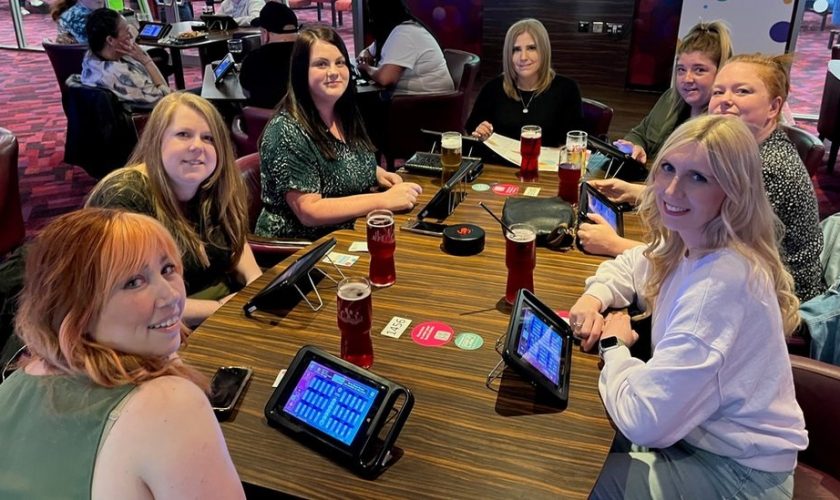
The Unspoken Rules of Saving Seats in Crowded Bingo Halls

Step into any bustling bingo parlor on a Friday night twenty minutes before the early bird game, and the atmosphere feels deceptively casual. Steam rises from styrofoam coffee cups, the concession stand churns out hot dogs, and the rhythmic clatter of plastic balls warming up in the blower provides steady background noise. Yet beneath this neighborly surface lies an intricate, fiercely defended social contract regarding space.
In a crowded hall, a folding chair is rarely just a piece of metal and vinyl. To the players who fill these rooms week after week, seating represents superstition, sightlines, routine, and status. While house rules posted on the wall rarely say much beyond “management reserves the right to seat players,” an elaborate set of unwritten protocols dictates who can claim a spot, how long they can hold it, and what happens when an unwitting newcomer crosses the line.

The Weight of Seniority and De Facto Real Estate

To understand seat reservation in a bingo hall, one must first recognize the concept of historical ownership. Regular players often occupy the exact same chair at the exact same folding table for five, ten, or twenty years. They know the acoustics of the room, the distance to the smoke break area, the speed of the floor runners, and which fluorescent bulb above the table has a slight flicker.
In the minds of the veteran contingent, consistent attendance transforms public property into personal territory. When an infrequent visitor or a novice player arrives early and unknowingly sits in a space occupied by a decades-long patron, friction is instantaneous.
Technically, open-seating halls operate on a first-come, first-served basis. Socially, ignoring established tenure is viewed as a breach of community etiquette. Experienced players arriving at an unfamiliar venue look for visual cues before pulling out a chair. If a table looks empty but sits right in the direct eye line of the main caller stand with worn tape marks on the floor, chances are it has a dedicated tenant who is currently in line for paper packs or fresh pull-tabs.

The Hierarchy of Place Markers

How a player marks an empty chair separates acceptable etiquette from amateur behavior. A bare chair surrounded by a vacuum of space is considered up for grabs, but regular patrons have turned temporary place-holding into an art form.
Not all place markers carry equal authority in the room:
  • The High-Commitment Setup: A multi-pocket bingo bag slung over the chair back, accompanied by an orthopedic seat cushion strapped to the base, represents an ironclad reservation. Adding a row of six color-coded ink daubers stood upright on the laminate surface elevates the claim to indisputable. Touching or moving this gear is the bingo equivalent of trespassing.
  • The Personal talisman: Seasoned players rarely travel without their good-luck charms. A ring of miniature plastic trolls, a specific pocket rosary, porcelain elephants facing the door, or a small battery-operated desk fan left humming on the table signals that someone has already staked their ground and will return shortly.
  • The Weak Claim: Leaving a single paper napkin, an empty beverage can, or a plain jacket draped over a backrest is widely seen as an ambiguous, second-tier effort. In a standing-room-only session where dozens of players are searching for seats, flimsy markers invite skepticism. If someone leaves an ambiguous token, neighboring players are frequently asked whether the seat is genuinely taken or merely cluttered.

The Limits of Proxy Reservation

One of the sharpest points of contention in a full house is the practice of reserving real estate for people who have not yet entered the building.
The social code allows for temporary absence. Stepping away from your table to buy extra game sheets, visit the restroom, order food, or purchase door prizes is universally respected, provided your cards or gear are visible. A player is considered anchored to their station.
Problems arise when a single early arrival attempts to monopolize an entire six-person banquet table for companions who are still navigating rush-hour traffic. While holding a single adjoining seat for a spouse or a regular partner is generally tolerated, reserving blocks of seating for absent players is considered bad form.
As the countdown clock ticks closer to the first number call and the perimeter of the hall fills with standing patrons holding their game books, the social pressure builds. When space runs out, empty chairs held by coats or purses become fair game. The unwritten standard dictates that if your party is not in the room by the time the caller conducts the audio check, you are obligated to release the surplus seats to players actively looking for a surface to play on.

The Mechanics of Sightlines and Sensory Comfort

The fierce protection of seats is not merely an exercise in ego; it is directly tied to the physical demands of high-concentration gameplay. A serious player might manage thirty to forty-eight faces simultaneously during a speed round. In that environment, small environmental factors dictate whether a player keeps pace or miscalculates a call.

Visual Anchors

Players rely heavily on continuous visual confirmation from the electric flashboards mounted on the walls. If a support pillar, a low-hanging exit sign, or an unusually tall player obstructs the board, tracking ball numbers becomes significantly more taxing. Seasoned players choose specific seats because the angle to the board matches their natural reading posture.

Audio Clarity

Acoustics in volunteer fire halls, fraternal lodges, and old community gyms are notoriously inconsistent. Certain corners trap reverberation, while spots directly under aged loudspeaker horns can be deafening. Regulars sit where the caller’s voice comes through clearly without distortion, reducing the risk of missing a split-second number call on a progressive jackpot.

Handling Inadvertent Encroachment with Grace

For newcomers or occasional players, walking into a packed room can feel intimidating. Navigating the seating puzzle without sparking an argument requires situational awareness and a cooperative approach.
If you find an apparently open chair, the proper protocol is never to sit down immediately without speaking. Look to the people seated immediately to the left and right, make eye contact, and ask directly whether anyone is sitting there. If a regular is holding the spot for a companion who is currently in the snack bar line, they will inform you immediately. Asking beforehand shows respect for the room and avoids the embarrassment of having your supplies moved when the rightful occupant returns.
Should you inadvertently take a seat that turns out to have an established historical claimant, stubbornness is rarely worth the lingering discomfort. Even if the house rules technically support your right to stay, playing a three-hour session enveloped in silent hostility from surrounding regulars ruins the enjoyment of the game. A polite nod, a quick gathering of your markers, and a calm relocation to another part of the hall keeps the room peaceful and often earns quiet respect from nearby observers.

The Shared Rhythm of the Hall

Every bingo hall operates as a self-regulating subculture with its own traditions, folklore, and unspoken boundaries. The territorial defense of chairs and tables might strike an outsider as excessive, but it is ultimately an expression of pride and routine for people who view the hall as their third place away from home and work.
By recognizing the markers of established turf, keeping proxy holds to a sensible minimum, and treating the surrounding players with practical courtesy, any visitor can easily blend in. Once the balls begin rolling and the first numbers echo across the speakers, personal territorial squabbles melt away into the collective, focused silence that defines the game.
read more
Betting

Unit Sizing vs. Flat Dollar Betting: How to Actually Protect a Bankroll

Most sports bettors spend ninety percent of their time dissecting matchups, tracking injury reports, and shopping for marginal half-point advantages across sportsbooks. Yet, the vast majority of players who exit the market broke do not fail because their predictive instincts were hopelessly flawed. They fail because their money management strategy was nonexistent.
In any endeavor governed by probabilistic outcomes, variance is an inescapable reality. Even a skilled bettor hitting fifty-five percent against a standard -110 spread will routinely endure stretches of seven, ten, or twelve consecutive losses over a multi-month campaign. When those inevitable drawdowns strike, the mathematical framework governing your stake size dictates whether your balance survives or evaporates.
The two most common approaches to capital allocation are flat dollar betting and unit sizing. While casual observers often treat them as interchangeable variations of the same concept, they operate under fundamentally different mathematical and psychological mechanics. Understanding how each model interacts with volatility is the difference between sustainable wagering and catastrophic ruin.

Defining the Baseline: Fixed Cash vs. Percentage-Based Abstraction

To evaluate both methods fairly, we must separate the mechanics of how bets are logged from how capital is actually risked.
Flat dollar betting is the simplest method available. A bettor decides on an arbitrary, static dollar amount—such as fifty or one hundred dollars—and wagers that exact sum on every single selection, regardless of recent results, perceived confidence, or overall account balance. The appeal lies in its simplicity; accounting requires zero recalculation, and tracking profits or losses is straightforward.
Unit sizing, by contrast, introduces a layer of abstraction designed to enforce portfolio discipline. A single unit is traditionally defined as a fixed percentage of your total liquid bankroll, typically between one and two percent. If a player maintains a five-thousand-dollar bankroll, a standard one-unit wager equals fifty dollars.
The critical distinction is that a unit is fundamentally tied to available capital, whereas a flat dollar stake is anchored to a static number. When utilized correctly, unit betting is not merely industry jargon used to boast on social media; it is a dynamic risk management tool that scales with financial reality.

The Hidden Fragility of Flat Dollar Wagering

Flat dollar wagering appears safe on the surface because it prevents reckless impulsive spikes in stake size. However, its rigidity becomes dangerous during prolonged downswings.
Consider an individual who funds an account with ten thousand dollars and wagers a flat two hundred dollars per game—representing an initial two percent allocation. If that bettor encounters a rough month and drops twenty units, their bankroll contracts to six thousand dollars.
Under a flat dollar framework, the player continues wagering two hundred dollars per ticket. What began as a conservative two percent exposure has now morphed into a 3.33 percent risk per game. As capital erodes, the relative risk profile of every subsequent wager accelerates. If the cold streak extends further, the bettor is forced into a state of heightened vulnerability where each loss inflicts a progressively larger percentage wound on the remaining capital.
The reverse occurs during an extended winning run. When the bankroll expands to fifteen thousand dollars, a flat two-hundred-dollar bet drops to just 1.33 percent of the balance. While this protects accumulated profits, it prevents the bettor from efficiently compounding their growth. Flat dollar wagering effectively amplifies downside risk while dampening upside momentum.

Dynamic Unit Sizing as a Built-In Circuit Breaker

Dynamic unit sizing solves the structural fragility of flat dollar stakes by recalibrating bet sizes based on current bankroll value.
When you anchor your unit size to a strict percentage—such as one percent of your current total balance—your stakes shrink automatically during a downswing. If your bankroll drops from ten thousand dollars to six thousand dollars, your unit size adjusts downward from one hundred dollars to sixty dollars.
This mechanism acts as an automatic defensive buffer. Because you are continually risking a fixed percentage of a shrinking pool, it becomes mathematically difficult to suffer total account liquidation. The system forces you to preserve capital precisely when variance is working hardest against you.

The Trade-Off: Climbing Out of Drawdowns

Dynamic percentage sizing is not without friction. Its primary drawback is that recovering from a drawdown takes longer. Because your stake sizes drop after losses, a subsequent winning streak starts from a smaller financial base. Winning five consecutive bets at sixty dollars will not fully offset five previous losses taken at one hundred dollars.
For this reason, elite bankroll managers rarely adjust unit sizes on a game-by-game basis. Instead, they implement periodic recalibration schedules. Rather than adjusting bet sizing after every individual ticket settles, they recalculate their unit value at predetermined intervals—such as the first of every month, or after a specific milestone, such as a twenty percent gain or loss. This preserves the compounding benefits of flat staking within short-term samples while maintaining the structural protection of percentage sizing over the long haul.

The Trap of Variable Unit Ratings

Within modern sports betting discourse, unit sizing is frequently corrupted by the concept of “confidence ratings.” Bettors assign one unit to an ordinary play, two units to a preferred matchup, and four or five units to a purported lock.
Variable unit sizing is one of the most reliable routes to bankroll depletion. It introduces subjective human emotion into a discipline that demands cold mathematical objectivity. Bettors consistently overestimate their predictive edge on larger wagers, often inflating their stake sizes to chase earlier losses or capitalize on perceived momentum.
The arithmetic of variable staking is unforgiving. A single loss on a four-unit play wipes out four separate one-unit victories. Over a long season, maintaining profitability while swinging wildly between one-unit and five-unit bets requires an unrealistically high win rate on those elevated wagers. A disciplined flat-unit model—where every single approved selection receives exactly one unit—eliminates human ego from the equation and lets edge work naturally through volume.

Managing the Psychological Reality of Drawdown

The mathematical argument between fixed dollars and percentage units ultimately intersects with human psychology.
Wagering in raw dollar amounts makes losses uncomfortably tangible. Watching physical money disappear triggers an instinctive emotional response that encourages revenge betting, tilt, and arbitrary staking changes. When an individual sees a three-hundred-dollar loss, they mentally equate that sum to groceries, car payments, or personal expenses.
Units create an emotional firewall. By converting cash into abstract increments, a bettor can evaluate their performance based on execution, closing line value, and statistical process rather than raw monetary swings. It removes the panic that causes players to double their bets after an unlucky bounce, allowing systematic strategy to prevail over short-term frustration.

Structuring a Sustainable Bankroll Framework

Protecting your capital requires establishing clear, non-negotiable boundaries before placing your first wager of the season.
First, delineate a distinct bankroll entirely segregated from personal checking accounts, savings, and living expenses. This capital must be treated as speculative investment funds that can withstand volatility without impacting day-to-day living.
Second, establish a baseline unit value between one and two percent of that dedicated pool. If you are operating with an aggressive strategy across high-variance wagers like underdogs or futures, keep that figure at one percent. For lower-volatility straight bets on spreads and totals, two percent provides an appropriate balance of growth and safety.
Finally, commit to a strict flat-unit execution. Treat every qualified play with equal mathematical respect, avoiding the temptation to assign elevated weight to intuitive hunches. Audit your total balance on a set monthly cadence, adjust your baseline unit figure accordingly, and let statistical edge compound over thousands of iterations. Survival is the only prerequisite for long-term profitability.
read more
1 2 3 … 15
Page 1 of 15