close

Hayden Seth

Bingo

The Hidden Strategic Facets of Bingo You Probably Haven’t Explored

The game of bingo might look like a simple game of chance, but beneath its cheerful numbers and lively atmosphere lies an intricate system of probability, player psychology, and environmental dynamics that separate casual dabblers from seasoned players. This article delves deep into the advanced layers of bingo strategy, from card selection and timing tactics to psychological reading and game pattern forecasting—without falling into the trap of beginner-level advice.

The Science Behind Bingo Probabilities

Understanding the mathematics of bingo is crucial if you want to make informed strategic decisions. While no one can manipulate randomness, skilled players leverage probability-based decision-making to optimize their chances of success.

The Role of Card Volume

The more cards you play, the greater your statistical share of potential winning combinations. In theory, holding more cards increases your probability of winning since each card represents another set of potential number combinations. However, there’s a trade-off. Too many cards may exceed your attention capacity, leading to missed calls or errors.

To find the right balance:

  • Choose a number of cards you can comfortably manage without losing focus.

  • Observe how quickly numbers are being called; faster games demand fewer cards.

  • Use organized layouts or digital tracking if playing online, to prevent errors.

Game Size and Competitor Count

Another factor that drastically affects your winning odds is the number of competitors. A smaller group means fewer competing cards, increasing your likelihood of winning. Yet, paradoxically, larger games often come with bigger prizes.

The strategic sweet spot often lies in medium-sized games, where the rewards remain substantial but the competition is not overwhelming.

Card Design: Strategic Selection and Distribution

Advanced bingo players often employ card-selection strategies that extend beyond random choice. The structure and numerical distribution of cards can influence your potential success rate in subtle but meaningful ways.

Pattern Distribution

Each bingo card contains a unique spread of numbers. The key is ensuring diversity across your set of cards. Avoid choosing multiple cards that share repetitive numbers in similar columns, as this limits your overall coverage of the number pool.

An effective tactic is to:

  • Select cards with evenly spread numbers across all columns.

  • Mix cards containing both high and low numbers.

  • Avoid patterns where several cards have the same clusters.

Psychological Comfort and Color Coding

Many professional bingo players color-code their cards or use distinctive markers for clarity. While this doesn’t directly impact probability, it reduces cognitive fatigue, ensuring faster response times when marking numbers. Maintaining sharp focus over many rounds can be a subtle yet decisive edge.

Timing and Environmental Control

Success in bingo isn’t only about numbers—it’s also about timing and environment.

Choosing When to Play

Peak sessions typically draw large crowds, which decreases your odds despite higher payouts. Off-peak sessions, often held in the early afternoon or late night, provide a more controlled environment with fewer competitors.

Moreover, some advanced players time their participation to coincide with specific jackpot cycles or promotional rounds, strategically entering when the reward-to-participant ratio is at its most favorable.

Reading the Room

Bingo halls have unique psychological rhythms. Understanding the flow of energy, speed of number calling, and emotional state of other players can enhance your situational awareness. A calm, focused environment improves your performance far more than a noisy, erratic one.

In online bingo, similar principles apply—choose quieter times with fewer players logged in, and ensure your surroundings are distraction-free.

Advanced Pattern Recognition

Bingo isn’t only about shouting “Full House.” Many variations require unique patterns—lines, diagonals, crosses, or thematic designs. Pattern forecasting can subtly shift your focus and improve your winning efficiency.

Adaptive Focus Strategy

Once a few numbers are drawn, begin mentally mapping potential outcomes on your cards. Skilled players quickly recognize when a particular card becomes a strong contender for a specific pattern. Redirecting attention to these “active” cards increases your reaction speed when the pattern completes.

Exploiting Unconventional Variants

Modern bingo has evolved beyond traditional hall games. Online and themed versions—such as speed bingo, 80-ball grids, and pattern bingo—each require different tactical approaches. Learning these nuances can give you an upper hand.

For instance:

  • Speed Bingo: Prioritize fewer cards and faster visual scanning.

  • Pattern Bingo: Focus on geometric prediction—anticipating clusters likely to complete a pattern.

  • Progressive Jackpots: Track frequency and cumulative jackpot data to identify optimal entry points.

The Psychological Edge in Competitive Bingo

Bingo is as much a social game as it is a game of numbers. Understanding the psychological dynamics can give you an advantage beyond raw probability.

Emotional Regulation

Remaining calm under pressure is vital. Many players lose focus after consecutive near-misses. Experienced players maintain composure, allowing them to perform consistently over extended sessions.

Observing Behavioral Patterns

In live bingo environments, experienced players often pick up on subtle cues—how other players react, how fast they mark numbers, or even how engaged they appear. While this won’t change the draw outcome, it can inform your timing and situational awareness.

Confidence and Focus

A confident, alert mindset minimizes mistakes. Overconfidence, however, can lead to lapses in concentration. The best players combine discipline with humility—trusting their strategy while staying responsive to new developments.

Leveraging Technology in Modern Bingo

Digital platforms have transformed bingo from a hall-based pastime into an online ecosystem filled with automation, analytics, and real-time engagement.

Smart Tools and Tracking Software

Advanced online bingo rooms offer auto-marking features, game stats, and even heat maps showing number distribution frequency. Learning to interpret this data provides an edge in recognizing emerging trends.

Multi-Room Strategies

Online players often participate in several rooms simultaneously. Managing this efficiently requires multitasking tools or browser extensions that allow simultaneous card monitoring. However, just like with physical cards, don’t exceed your processing capacity—prioritize quality over quantity.

Community and Collaboration

Bingo communities often share insights on winning trends, software updates, and number patterns. Participating in forums or chat groups helps players adapt faster to changing game formats and algorithms.

Responsible Strategic Play

Even the most skilled strategies must operate within a responsible framework. Bingo remains a game of chance, and success depends partly on random outcomes. Setting limits—on both spending and playtime—is essential for long-term sustainability.

Practical Guidelines:

  • Establish a clear budget for each session.

  • Avoid chasing losses; focus on entertainment value.

  • Celebrate small wins and recognize when to pause.

FAQ – Advanced Bingo Questions

Q1. How can I identify when a bingo hall or site offers the best odds?
Look for rooms with fewer players and moderate jackpots; these balance payout potential with improved probability.

Q2. Do online bingo algorithms ensure fairness?
Yes. Licensed platforms use Random Number Generators (RNGs) audited for fairness and unpredictability.

Q3. Is it better to specialize in one type of bingo variant?
Yes—mastering a specific format (e.g., 75-ball or 90-ball) allows deeper pattern familiarity, improving reaction time and situational judgment.

Q4. How can technology improve my bingo performance?
Use features like auto-daubing, game statistics, and alerts for near wins to reduce human error and enhance decision-making.

Q5. Does playing during specific times improve your chances?
Statistically, yes. Fewer players during off-peak hours increase your relative winning odds.

Q6. What’s the biggest mistake experienced players make?
Overextending attention—either through excessive card counts or multitasking across too many rooms—leading to missed opportunities.

Q7. Can pattern prediction really influence outcomes?
Not directly, but it improves your awareness and speed, allowing faster recognition and better use of “live” cards in complex patterns.

read more
Blackjack

The Psychology of Deception in High-Stakes Blackjack: Reading Minds and Masking Intent

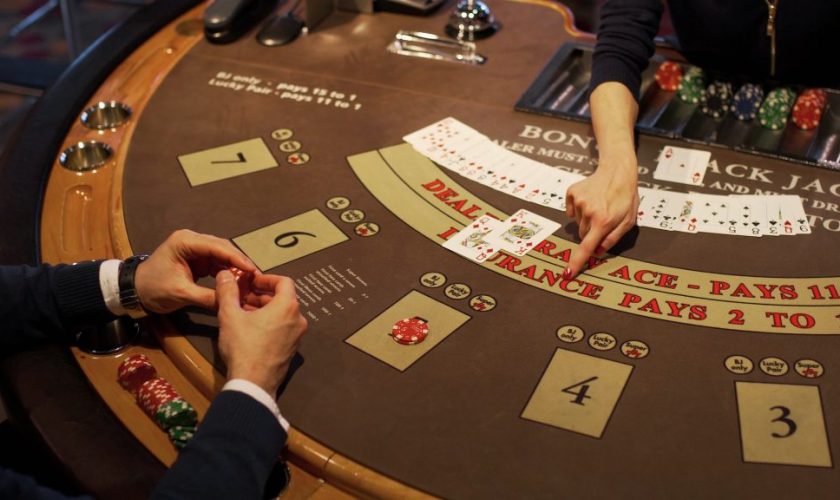
Blackjack is often portrayed as a battle of mathematics — probabilities, odds, and percentages. Yet, beneath the numbers lies a less explored dimension: psychological warfare. In elite, high-stakes Blackjack circles, victory frequently depends on reading human behavior, concealing intent, and manipulating perception. While card counting and basic strategy create the foundation, the real mastery lies in controlling the invisible — the human mind.

Beyond Strategy Charts: The Mental Chessboard of Blackjack

For professionals, Blackjack extends far beyond the standard playbook. Every action at the table — from a subtle hesitation to a confident chip placement — can transmit psychological signals. High-stakes players know that their demeanor affects not only opponents but also dealers and pit bosses. The most seasoned Blackjack veterans transform the table into a psychological chessboard, where mental resilience, emotional camouflage, and controlled deception replace mechanical gameplay.

The Role of Behavioral Cues in Decision Making

Every Blackjack player exhibits a behavioral pattern, whether they realize it or not. Advanced players train to observe these patterns with precision. Micro-expressions, posture shifts, breathing tempo, and chip handling all serve as involuntary cues that reveal confidence or uncertainty. Recognizing these behavioral leaks helps experienced players gauge when an opponent is strong or weak.

For instance, a player who subconsciously exhales after viewing their hand may be releasing tension, signaling relief or confidence. Conversely, repetitive tapping or unnecessary chatter could indicate nervousness or distraction. In professional Blackjack settings, these small details can guide betting adjustments, timing, and table control.

The Art of Strategic Misdirection

Deception in Blackjack doesn’t always mean cheating — it’s about psychological misdirection. High-stakes players often cultivate a crafted table image that manipulates how others perceive them. A seemingly reckless player might intentionally act impulsive to lure others into underestimating their precision. Similarly, a calm, emotionless demeanor can mask aggressive betting strategies.

This form of psychological camouflage is as valuable as a counting system. By controlling how others read your behavior, you reduce predictability and gain strategic freedom. True mastery involves not only reading opponents but also managing how you are read — a delicate art of playing both the cards and the minds around you.

Emotional Composure: The Shield of the Elite Player

Maintaining emotional neutrality is among the hardest challenges in Blackjack. The rhythm of winning and losing creates intense emotional swings. Professional players understand that every visible emotion becomes usable information for the observant eye. The moment a player reacts — whether in triumph or frustration — they open a psychological door.

That’s why seasoned professionals practice emotional control routines. Deep breathing, consistent chip placement, and a steady tone of voice are employed to maintain a “flatline” presence. In environments like VIP rooms or exclusive tournaments, this stoicism serves as armor — concealing internal states while amplifying unpredictability.

Reading Dealers: The Overlooked Advantage

Dealers, often dismissed as neutral participants, can inadvertently reveal valuable insights. While they’re trained to maintain composure, fatigue, distraction, or subtle reactions sometimes betray the strength of a card or upcoming shuffle. Experienced players learn to observe the rhythm of the dealer’s hands, eye movements, and even tone when announcing results.

A dealer who hesitates slightly when drawing the next card may signal uncertainty or recognition of a potentially game-changing hand. While exploiting this isn’t foolproof, integrating dealer observation into broader decision-making can sharpen awareness and increase long-term performance.

The Mirror Technique: Reflecting to Disarm

One of the most intriguing psychological tools in Blackjack is mirroring — subtly mimicking another player’s body language or speech patterns to build unconscious rapport. Mirroring helps disarm opponents, encouraging them to relax and act naturally. Once a connection is established, they’re more likely to drop their guard, allowing deeper behavioral reads.

This tactic works particularly well in multi-hand or casual private games, where players engage socially. However, the mirror technique requires finesse; overdoing it risks exposure and awkwardness. In its ideal form, mirroring blends seamlessly with the player’s personality, creating a soft psychological advantage through trust and relatability.

High-Stakes Pressure and Cognitive Fatigue

As Blackjack sessions extend into hours, mental fatigue begins to erode precision. Concentration slips, micro-calculations slow, and emotional reactions intensify. Elite players use fatigue management techniques to stay sharp — microbreaks, hydration, or mental resets between shuffles. Understanding how fatigue affects both yourself and your opponents creates a psychological edge.

A tired opponent is more likely to make suboptimal decisions, misread signals, or overreact emotionally. Recognizing signs of exhaustion — drooping posture, slower chip movements, longer reaction times — allows opportunistic betting at moments when others’ cognitive performance declines.

Deception Through Betting Patterns

Beyond physical and emotional signals, betting behavior itself can serve as psychological camouflage. The art of masking your true hand strength through inconsistent bet sizes or timing is a form of controlled deception. Professionals often vary their wagers not solely based on the count but to distort patterns that surveillance or opponents might detect.

For example, a player might intentionally place a large bet after a losing streak to create the illusion of emotional impulsiveness — while in reality, it aligns with a favorable count. By injecting unpredictability into betting habits, the player disrupts attempts by observers to anticipate their strategy.

Manipulating Table Energy: The Power of Presence

Every Blackjack table has its own “energy” — the collective emotional tone created by players, dealers, and the environment. Skilled players learn to manipulate this energy to their advantage. By controlling conversation, injecting humor, or shifting the mood, they can influence others’ focus and rhythm.

A well-timed joke, light comment, or confident silence can disrupt tension or refocus attention. This subtle control of atmosphere works as an indirect weapon — calming adversaries into mistakes or redirecting pressure away from oneself.

Psychological Countermeasures: Guarding Against Mind Games

Understanding psychological tactics also means defending against them. Professionals develop awareness routines — periodic self-checks to ensure emotional neutrality and mental clarity. Techniques like deliberate blinking, controlled breathing, or visualization can reset focus and prevent manipulation.

Equally important is recognizing when someone is attempting to read or influence you. Maintaining consistent behavior, both in wins and losses, protects against external control. The goal isn’t to appear robotic, but balanced — revealing just enough to seem natural while concealing strategic depth.

FAQs: Advanced Blackjack Psychology and Deception

1. Can psychological strategies replace mathematical skill in Blackjack?
No. Psychological tactics enhance, not replace, core strategy. Card counting and probability analysis remain essential foundations, while psychology refines timing, reactions, and perception management.

2. How do professional players train to read behavioral cues?
They use real-world observation, video review, and exercises in micro-expression recognition. Many also study poker psychology to transfer reading skills to Blackjack settings.

3. Is manipulating perception considered cheating?
Not at all. As long as there’s no device, collusion, or card tampering, psychological manipulation is part of legitimate competitive play.

4. Do casinos monitor for psychological tactics?
Casinos track betting patterns and card counting but rarely penalize behavioral play. However, extreme emotional manipulation can draw unwanted attention.

5. How can a player develop emotional control?
Through mindfulness, controlled breathing, and consistent practice in simulated pressure environments. The goal is to respond calmly to wins and losses alike.

6. Does the dealer’s psychology influence the game’s outcome?
While dealers follow fixed rules, their behavior can affect tempo and player rhythm. Attentive players use this subtle influence to maintain focus and advantage.

7. Are these techniques effective in online Blackjack?
Psychological tactics are limited online due to lack of physical interaction, but timing, bet pacing, and chat tone can still convey psychological intent.

read more
Slots

How can you compare online slot bonuses and promotional offers?

Comparing promotional offers requires examining multiple factors beyond the advertised bonus amounts that initially attract attention. Hidden requirements, time limitations, and game restrictions often determine the actual value players receive from different promotional opportunities. Smart comparison involves calculating true cost-benefit ratios while considering personal gaming preferences and playing habits. The evaluation process helps identify offers that provide genuine value rather than misleading marketing presentations. Joy.link free credit no deposit highlights the importance of scrutinizing slot promotions to identify truly advantageous offers.

Wagering requirement analysis

The playthrough requirements help identify which bonuses provide realistic completion opportunities versus those designed primarily for marketing appeal.

  • Requirement multipliers determine how many times bonus amounts must be wagered before withdrawal becomes possible
  • Game contribution percentages show which games count fully toward requirements versus those with reduced contributions
  • Time limitations specify deadlines for completing wagering requirements before bonuses expire automatically
  • Maximum bet restrictions during bonus play prevent high-stakes strategies that could quickly fulfil requirements
  • Progressive jackpot exclusions limit which games remain accessible during bonus wagering periods
  • Bonus forfeiture conditions explain circumstances that void bonuses and any associated winnings immediately

These requirement details often reveal that larger bonuses with strict conditions provide less value than smaller offers with reasonable completion terms.

Value calculation methods

Accurate value assessment requires examining total costs versus realistic benefits rather than focusing solely on promotional headlines and marketing claims.

  • Deposit requirements determine minimum investment amounts needed to activate promotional offers
  • Cashback percentages indicate potential loss recovery amounts during unsuccessful gaming sessions
  • Free spin quantities and individual spin values combine to establish actual promotional value
  • Withdrawal limitations specify maximum amounts that can be extracted from bonus-related winnings
  • Account funding restrictions may require specific payment methods that incur additional fees
  • Currency conversion costs affect international players using non-native currencies for deposits

Mathematical comparison reveals which offers provide optimal return potential based on individual gaming budgets and risk tolerance levels.

Terms and restriction evaluation

Hidden limitations often reduce promotional value below advertised levels, so a careful review of the terms is essential for accurate comparison.

  • Geographic eligibility restrictions prevent players from certain locations from accessing specific promotional offers
  • Account verification requirements may delay bonus activation until identity documentation receives approval
  • Existing player limitations exclude certain account holders from accessing promotional offers designed for new registrations
  • Simultaneous bonus restrictions prevent claiming multiple offers during overlapping periods
  • Game exclusion lists specify which titles cannot be played using bonus funds or free spin allocations
  • Support contact requirements mandate customer service interaction before bonus activation or withdrawal approval

These restriction details help players avoid disappointment when attempting to claim offers that appear available but include disqualifying conditions.

Personal suitability assessment

The best promotional offers align with individual gaming preferences, budget constraints, and time availability rather than simply offering the largest headline numbers. Player-specific factors determine which bonuses provide optimal entertainment value. Gaming frequency affects whether time-limited offers can be reasonably completed within specified deadlines. Casual players benefit more from extended completion periods than intensive wagering requirements designed for frequent players.

Preferred game types influence bonus value since contribution percentages vary between different gaming categories. Budget limitations determine whether deposit requirements align with comfortable spending levels. High-minimum bonuses may exceed reasonable investment amounts for players with modest gaming budgets. This evaluation process identifies promotional offers that deliver genuine benefits rather than superficially attractive marketing presentations that provide limited actual value to participating players.

read more
Online Casino

How do megaways mechanics transform online casino gaming?

Megaways mechanics revolutionize slot gaming through variable reel structures that change the number of symbols appearing on each reel with every spin. This dynamic system creates hundreds to thousands of potential winning combinations per spin. By providing mathematical complexity, these innovative mechanics deliver unpredictable gameplay that creates sustained player interest.

Variable reel structures

With reels functioning autonomously, Free Credit No Deposit integrates seamlessly into the wide range of spin patterns and grid variations. Players experience unique visual layouts with every spin, as the game engine calculates new reel structures before displaying symbols. This mechanical innovation eliminates the predictable patterns that can develop in fixed-structure games:

  • Reel heights varying from two to seven symbols per column are randomly
  • Independent height calculation for each of the six standard reel positions
  • Dynamic grid layouts create fresh visual presentations continuously
  • Mathematical combinations reaching over 100,000 ways to win frequently

Ways of calculation

The transformation of gaming occurs through complex mathematical calculations that determine winning combinations based on adjacent symbol matching rather than traditional payline structures. Megaways systems multiply the number of symbols on each reel to calculate total ways to win, creating astronomical combination possibilities that dwarf conventional slot mathematics. This calculation method ensures that every spin offers maximum winning potential regardless of the random reel configuration.

Players benefit from simplified winning mechanics where matching symbols need only appear on adjacent reels starting from the leftmost position. The elimination of traditional paylines removes confusion about which combinations count as wins while maximizing the potential for multiple simultaneous winning combinations. Each spin’s mathematical potential depends entirely on the randomly generated reel structure, creating genuine unpredictability in gaming outcomes.

Symbol density variations

The density variations create natural rhythm changes within gaming sessions, alternating between high-action spins with numerous small wins and lower-action spins with concentrated winning potential. Players experience diverse mathematical environments within single gaming sessions, preventing the monotony that can develop in fixed-structure formats:

  • High-density spins generating maximum combination potential regularly
  • Low-density configurations concentrating winning values into fewer opportunities
  • Medium-density spins balancing combination quantity with individual win values
  • Unpredictable density patterns maintain engagement through mathematical variety

Cascading integration systems

Integrating cascading mechanics with megaways structures creates compound transformation effects that extend individual spins into winning sequences. Winning symbols disappear after payout calculation, allowing remaining symbols to drop into new positions while fresh symbols fill empty spaces from above. Each cascade recalculates the ways to win based on the new symbol arrangement, potentially creating additional winning combinations. This integration transforms single spins into dynamic sequences where multiple wins can occur consecutively without additional betting requirements. Combining variable reel structures with cascading mechanics creates mathematical scenarios where dozens of consecutive wins become possible through favourable symbol arrangements and replacement patterns.

Mathematical complexity enhancement

Megaways mechanics introduce sophisticated mathematical models that transform gaming through increased complexity and unpredictability. The combination of variable reel heights, calculation methods, and cascading systems creates multi-layered probability scenarios that cannot be easily predicted or manipulated. This mathematical sophistication appeals to players seeking genuine randomness and excitement in their gaming experiences. The enhanced complexity ensures that optimal playing strategies remain impossible to develop, maintaining the pure chance elements that define exciting slot gaming. Players cannot predict or influence the random reel generation systems, creating authentic gambling experiences where skill cannot override mathematical randomness.

read more
Slots

Are slot wild symbols distributed randomly throughout the game?

Wild symbol distribution follows complex mathematical algorithms that balance randomness with predetermined probability weights, creating gameplay that appears random while maintaining specific return-to-player percentages. Game developers program wild symbols to appear at calculated frequencies rather than purely random intervals, ensuring games meet regulatory requirements and business objectives. Luxury777 explains how weighted probabilities control wild symbol placement to balance fairness and payout goals.

Random number generators

Modern slot games utilise pseudorandom number generators that produce sequences of numbers appearing random but following deterministic mathematical formulas. These algorithms generate millions of number combinations per second, with each number corresponding to specific reel positions and symbol arrangements. Wild symbols receive assigned numerical ranges within these sequences, determining their appearance frequency based on programmed probability weights rather than pure chance. The timing of when players initiate spins determines which number sequence the game selects, creating the illusion of random wild placement while operating within predetermined mathematical parameters. These systems ensure that wild symbols appear with consistent frequency over extended play periods, even though individual sessions may show significant variation in wild symbol distribution patterns.

Weighted probability systems

  • Wild symbols typically receive lower probability weights compared to regular symbols, making their appearance less frequent but more valuable when they occur
  • Different reel positions may have varying wild symbol probabilities, with some positions programmed to produce wilds more frequently than others
  • Multi-symbol wilds and expanded wilds often have different probability weights than standard single-position wild symbols
  • Bonus round wild distributions frequently operate under separate probability systems with enhanced wild appearance rates
  • Progressive wild systems may adjust probabilities based on previous spin results or accumulated game metrics

Predetermined symbol sequences

Slot games store vast libraries of predetermined symbol sequences, including specific wild symbol placements designed to achieve target payout percentages. These sequences undergo rigorous mathematical testing to meet regulatory fairness standards while providing engaging gameplay experiences. Wild symbols within these sequences are strategically positioned to create winning combinations at calculated intervals, maintaining player interest while controlling overall game volatility. The rotation through these predetermined sequences creates variation in wild symbol distribution that players perceive as random, though the underlying structure follows carefully designed mathematical models. Game developers balance wild symbol frequency within sequences to prevent excessive clustering and extended drought periods that might negatively impact player experience.

Variance control mechanisms

Game variance settings directly influence wild symbol distribution patterns, with high-variance games featuring less frequent but more impactful wild appearances. In contrast, low-variance games distribute wilds more evenly throughout gameplay. These variance controls adjust the clustering tendencies of wild symbols, determining whether they appear individually or in groups that create more substantial winning opportunities. Adaptive variance systems monitor player behaviour and game performance metrics, making subtle adjustments to wild symbol distribution patterns that maintain engagement while preserving mathematical integrity. These systems can modify wild appearance timing based on factors like session length, bet sizes, and previous winning patterns, though these adjustments operate within strict regulatory boundaries.

These complex systems balance competing objectives: maintaining player interest through varied wild symbol patterns, achieving consistent mathematical returns, and meeting regulatory fairness requirements. The result is a wild symbol distribution that feels random to players while operating within carefully controlled parameters that ensure sustainable and fair gaming experiences.

read more
Slots

The Evolution of Slot Mechanics: How Advanced Algorithms Are Redefining Modern Slot Gameplay

Introduction

The world of slot gaming has advanced far beyond the classic spinning reels and fruit symbols. Today’s slot machines are powered by complex algorithms, AI-driven personalization, and data-optimized design, creating a highly engaging experience for seasoned players. Unlike the static games of the past, modern slots dynamically adapt to player preferences, behaviors, and even emotional responses. Understanding these evolving mechanics offers valuable insight into the future of casino entertainment and the strategies shaping the next generation of slot gaming.

The Transformation from Static RNGs to Adaptive Game Engines

Classic RNG Systems: The Foundation of Fair Play

In traditional slot machines, outcomes were determined solely by Random Number Generators (RNGs) — mathematical systems designed to ensure each spin was entirely independent and unpredictable. This randomness maintained fairness but offered no room for evolution or interaction. Every player received the same static experience regardless of skill level or engagement.

Dynamic Probability Engines in Modern Slots

Modern slot systems go far beyond standard RNGs. Developers now employ dynamic probability mapping, an advanced system that subtly adjusts game outcomes within regulatory limits based on factors like playtime, bet frequency, and engagement levels. While fairness remains intact, this approach allows for custom-tailored entertainment experiences. These adaptive systems can:

  • Modify bonus frequency without affecting RTP (Return to Player).

  • React to player inactivity by triggering engagement features.

  • Adjust volatility modes to suit varying session lengths.

Such innovation turns each session into a unique experience, effectively merging randomness with intelligent personalization.

AI-Powered Slot Design: Learning from Player Behavior

How Artificial Intelligence Reshapes Slot Engagement

Artificial Intelligence has become a game-changer in the slot industry. AI-driven analytics help developers and operators study behavioral data, including bet patterns, session times, and emotional triggers. The goal is to craft personalized game paths that sustain interest and increase retention.

For example, AI can detect when a player is likely to disengage and introduce a timely feature spin or bonus round to reignite excitement. Some high-end platforms even use predictive AI models to create personalized slot recommendations, similar to how streaming services suggest content based on previous activity.

AI-Generated Slot Content and Procedural Design

Beyond player analytics, AI now assists in procedural content generation — the automatic creation of slot visuals, sound effects, and animations. This allows developers to generate fresh game variants efficiently while maintaining high-quality visual storytelling. As a result, players encounter unique game worlds crafted through AI-aided creativity, reducing content fatigue.

The Rise of Volatility Mapping and Advanced Game Architecture

Understanding Volatility Layers

Volatility, or variance, defines how often and how much a slot pays out. Traditional slots were locked into fixed volatility levels. However, next-generation games employ multi-layered volatility systems that adjust in real-time. These are often embedded into game architecture through volatility mapping algorithms, offering the following benefits:

  • Adaptive difficulty that suits casual and high-stake players simultaneously.

  • Dynamic risk-reward balance, keeping engagement consistent across play sessions.

  • Enhanced RTP flexibility, enabling sustainable operator management.

This system creates a smoother gaming curve where player psychology and reward cycles align harmoniously.

Cluster Mechanics and Symbol Fusion

Another emerging design philosophy involves cluster mechanics, where symbols merge, expand, or trigger chain reactions. Instead of static paylines, modern slots use grid-based payout systems influenced by probabilistic modeling. These designs enhance visual engagement and open creative possibilities for bonus structures and multipliers.

Cross-Platform Integration and Cloud Gaming in Slots

Seamless Gameplay Across Devices

In 2025, slot games are no longer confined to physical machines or single devices. The rise of cloud gaming technology enables users to play seamlessly across platforms — from desktop to mobile to smart TVs — without sacrificing performance. Cloud-based slots store game data centrally, allowing for synchronized progress and unified player profiles.

The Role of 5G and Real-Time Syncing

With global 5G expansion, low-latency data exchange enhances slot responsiveness and visual quality. Developers leverage this to introduce real-time tournaments, where players across regions compete on shared virtual reels. Such innovations transform traditional solo play into a social, networked experience.

The Psychology of Slot Retention: Data Meets Emotion

Gamification and Behavioral Triggers

Today’s slot developers integrate psychological engagement layers, blending elements of gamification such as achievements, missions, and level progression. These mechanics convert slot gaming into a goal-oriented experience, driving deeper emotional investment.

Features like animated progression maps, dynamic reward milestones, and personalized feedback loops motivate players to return. Combined with AI-driven pattern recognition, these systems can predict disengagement moments and adapt accordingly — a sophisticated fusion of data science and behavioral psychology.

Sound Design and Emotional Cues

Advanced soundscapes play an integral role in slot immersion. Developers now utilize psychoacoustic techniques — subtle sound frequencies that influence mood and anticipation. Each spin’s tempo, tone, and resonance are scientifically tuned to enhance engagement, especially during near-win scenarios.

Regulatory Implications of Advanced Slot Algorithms

Balancing Innovation and Fairness

While adaptive systems enhance gameplay, they also raise regulatory questions regarding transparency and ethical design. Gambling commissions worldwide are developing AI oversight frameworks to ensure dynamic algorithms operate within legal fairness standards.

Developers are now required to disclose adaptive probability structures and certify compliance through independent audits. This growing focus on algorithmic accountability ensures both innovation and player protection evolve in balance.

The Future of Slot Mechanics: Predictive Gaming Ecosystems

The next wave of slot technology is steering toward predictive gaming ecosystems, where machine learning models anticipate player preferences before they even spin. By blending biometric data, facial recognition, and emotion-tracking systems, casinos aim to create ultra-personalized slot environments.

These innovations hint at an era where slots act as interactive entertainment platforms rather than isolated gambling products. Imagine AI-driven game worlds that evolve based on your mood or strategic tendencies — a true convergence of gaming, psychology, and machine intelligence.

FAQs

1. How do adaptive RNG systems differ from traditional RNGs?
Adaptive RNGs use player behavior data to fine-tune experiences while maintaining fair randomness, whereas traditional RNGs operate purely on statistical independence.

2. Can AI-based personalization affect the fairness of a slot game?
No. AI personalization influences presentation and engagement pacing, not the outcome probabilities regulated by gaming authorities.

3. What is volatility mapping in modern slots?
Volatility mapping is a layered algorithm that dynamically adjusts payout variance to suit different playstyles and maintain long-term engagement.

4. How do procedural slot designs benefit players?
Procedural designs create endless variations of visuals and mechanics, ensuring freshness and reducing repetitive gameplay fatigue.

5. Is cross-platform slot gaming secure?
Yes. Cloud-based systems use encrypted data streams and secure authentication protocols to protect player information and transactions.

6. What role does sound design play in advanced slots?
Sound design enhances emotional immersion through frequency manipulation and rhythm synchronization, directly influencing player excitement.

7. What’s next for slot technology beyond 2025?
Future slots will integrate AI-driven predictive systems, biometric feedback, and real-time adaptive environments that tailor gameplay to individual psychological profiles.

Conclusion
Slot gaming has evolved from mechanical reels to intelligent, algorithm-driven ecosystems that learn, adapt, and engage. With the rise of AI, volatility mapping, and predictive modeling, the line between entertainment and personalized gaming continues to blur. The future of slots lies not just in randomness, but in responsive intelligence — where every spin tells a story shaped by data, emotion, and innovation.

read more
Card Game

The Psychology of Bluffing in Competitive Card Games: Mastering the Art of Controlled Deception

Introduction

In the world of competitive card games, success depends on far more than mathematical probability or memorizing strategies. What truly defines elite players is their ability to manipulate perception and emotion—skills that revolve around the art of bluffing. Bluffing isn’t about random deception; it’s a deliberate psychological maneuver designed to influence how opponents think, feel, and react. Understanding the deep psychology behind bluffing allows players to transform an average hand into a winning strategy and elevate their gameplay to a professional level.

The Psychology Behind Bluffing

The Concept of Controlled Deception

Bluffing operates on the principle of controlled deception—a calculated act of misleading opponents without losing control over your own behavior. Unlike luck-based moves, successful bluffing requires emotional discipline and a well-constructed plan. Every bluff tells a story. The way you place your bets, hold your cards, or interact with others contributes to the illusion you wish to create. The key lies in making your bluff believable and internally consistent within the context of your gameplay style.

Professional card players understand that bluffing is as much about selling a believable narrative as it is about concealing the truth. To deceive effectively, you must make your actions appear entirely natural and logical from your opponent’s perspective.

Cognitive Biases and How They Influence Bluffing

Human psychology is riddled with cognitive biases—mental shortcuts that affect decision-making. Skilled players exploit these biases to manipulate their opponents. For instance:

  • Confirmation bias: Opponents believe information that supports what they already think. You can feed them selective clues that reinforce a false narrative.

  • Anchoring bias: The first impression you create—through betting size or posture—sets a psychological anchor for your opponent’s interpretation of your strength.

  • Recency bias: Opponents often recall the most recent events and base their next move on them. Bluffers can use this to exploit short-term memory and predictable reactions.

Bluffing succeeds because people prefer consistency; they often ignore contradictory evidence when it conflicts with their established mental model.

The Behavioral Science of Bluffing

Body Language and Micro-Expressions

Bluffing in card games is as much about acting as it is about strategy. The most experienced players understand the science of non-verbal communication. Subtle gestures, tone of voice, and even breathing patterns reveal information. A slight tremor, averted gaze, or unnatural stillness can betray the truth. Successful bluffers maintain a controlled physical presence—relaxed yet deliberate.

In contrast, advanced players use “reverse tells” to mislead observant opponents. For example, pretending to appear nervous when holding a powerful hand can provoke others to misjudge the situation. The ability to fake vulnerability is a hallmark of elite bluffing psychology.

Table Image and Reputation Management

In long-term play, bluffing is shaped by table image—the perception others have of your playing style. A conservative player who suddenly raises aggressively appears more credible when bluffing. Conversely, a reckless bluffer loses credibility quickly, reducing the effectiveness of future attempts. Successful players manage their image over time, blending truth and deception so seamlessly that opponents never feel entirely secure.

Building a balanced image requires alternating between genuine plays and calculated bluffs. Consistency in demeanor is critical; a single behavioral deviation can alert perceptive opponents.

Timing and Situational Awareness

Knowing When to Bluff

Timing is the invisible architecture of a perfect bluff. Even a flawless act of deception fails if executed at the wrong moment. Experienced players evaluate multiple variables before attempting a bluff: opponent tendencies, pot odds, position, and recent table dynamics.

Ideal bluffing moments often occur when:

  • You sense opponent fatigue or frustration.

  • The stakes are moderate—high enough to matter but not crippling if lost.

  • The board or gameplay context offers plausible strength for your hand.

  • You’ve cultivated an image of reliability or caution.

Bluffing at predictable intervals, however, is a critical mistake. Randomness in frequency keeps opponents uncertain, forcing them into reactive rather than proactive decision-making.

Adapting to Opponent Archetypes

Every opponent interprets bluffs differently based on their personality type. Aggressive players tend to challenge bluffs more often, requiring subtlety and restraint. Passive players, on the other hand, fold easily when pressured, making them ideal targets for psychological manipulation.

Recognizing these archetypes allows players to tailor their bluffing strategy. Against intuitive or emotional players, focus on emotional cues. Against analytical players, exploit logical inconsistencies in their perception of the game state.

Advanced Bluffing Techniques in Competitive Environments

The Semi-Bluff

A semi-bluff occurs when you hold a hand that isn’t strong yet has potential to improve. It combines deception with calculated risk. This technique allows you to apply pressure while maintaining backup equity. Even if opponents call your bluff, future draws can still convert it into a legitimate victory.

Reverse Bluffing

Reverse bluffing flips the traditional concept—appearing weak when you’re actually strong. It’s a high-level psychological maneuver used to bait aggressive opponents into overcommitting. The technique relies on emotional intelligence and precise timing, making it one of the most powerful yet underutilized strategies in card gaming.

Multi-Level Bluffing

At elite levels, players engage in multi-level bluffing, anticipating not only their opponents’ responses but also their perception of your intentions. It’s a recursive mental game: “I know that you know that I might be bluffing.” This level of psychological play demands deep familiarity with both human behavior and opponent-specific patterns.

Ethical and Psychological Limits of Bluffing

While bluffing is integral to many card games, it treads a fine ethical line. Overuse or inappropriate timing can shift gameplay from strategy to manipulation. Effective bluffing maintains respect for the opponent’s intelligence—it challenges, not deceives unfairly. Psychologically, continuous bluffing requires emotional stamina. Over time, the strain of maintaining false narratives can lead to mental fatigue and decision burnout.

Elite players maintain equilibrium through self-awareness. They understand when to disengage, recalibrate, and play honestly to restore emotional balance. The real strength of bluffing lies in control—over both your opponent and yourself.

FAQs

1. Is bluffing more about psychology or mathematics?
Bluffing is primarily psychological but is grounded in mathematical logic. The decision to bluff should align with probabilities, pot odds, and opponent behavior analysis.

2. How can I tell if an opponent is bluffing?
Look for inconsistencies between their betting patterns and their previous behavior. Rapid shifts in demeanor, exaggerated gestures, or unusual stillness are classic indicators.

3. Can bluffing be successful in online card games?
Yes. Although physical tells are absent, timing, betting patterns, and reaction speeds offer digital “tells” that experienced players can read.

4. How often should I bluff in a game?
There’s no fixed frequency. Bluffing too often becomes predictable; too rarely makes you transparent. Balance and unpredictability are key.

5. What are the biggest mistakes in bluffing?
Bluffing without context, ignoring table dynamics, or bluffing emotional opponents can backfire. The worst mistake is bluffing when the story you’re telling doesn’t make sense.

6. How do professionals train for bluffing?
They practice emotional regulation, study behavioral psychology, and review game footage to refine both timing and narrative construction.

7. Is bluffing ethical in all card games?
In games where deception is part of strategy—like poker—it’s entirely acceptable. However, bluffing outside of agreed rules or using non-verbal cheating tactics crosses ethical boundaries.

read more
Betting

Are there optimal portfolio allocations for dice betting?

Portfolio allocation principles from traditional investment theory apply remarkably well to dice betting environments where risk management becomes paramount for long-term success. These allocation strategies allow players to visit crypto.games to play bitcoin dice and distribute their gaming capital across different betting approaches while maintaining appropriate risk levels for their circumstances. Optimal allocation involves balancing aggressive high-reward opportunities with conservative capital preservation techniques that protect against catastrophic losses. Strategic portfolio management transforms random betting into a systematic capital deployment that optimizes risk-adjusted returns across gaming sessions.

Risk tolerance calibration

Individual risk tolerance forms the foundation for optimal portfolio allocation decisions in dice betting environments. Players with different capital levels and personal circumstances require varying allocation strategies based on risk capacity and psychological comfort levels. This calibration process ensures betting allocations match individual financial situations rather than following generic allocation models. Risk tolerance assessment involves evaluating the financial capacity to absorb losses and the emotional ability to handle variance without making poor decisions. The resulting risk profile guides allocation percentages across betting strategies, from conservative to aggressive approaches. This personalized calibration creates sustainable gaming approaches that match individual circumstances rather than an inappropriate one-size-fits-all strategy.

Capital segmentation methods

The portfolio allocation requires dividing available capital into segments with specific purposes and risk characteristics. These segmentation approaches prevent mixing different strategic objectives that could lead to suboptimal allocation decisions.

  • Core holdings allocated to conservative strategies with steady returns
  • Growth segments designated for moderate-risk opportunities with higher potential
  • Speculative portions reserved for high-risk, high-reward betting approaches
  • Emergency reserves maintained for recovery during adverse variance periods
  • Operational funds covering routine betting activities without touching strategic reserves

This segmentation approach ensures each capital portion serves its intended purpose while preventing inappropriate cross-contamination between strategic objectives that could compromise overall portfolio effectiveness.

Variance management frameworks

Portfolio allocation must account for variance characteristics of different betting strategies to create appropriate risk distribution across the gaming portfolio. These variance considerations help optimize allocation percentages based on the mathematical properties of varying betting approaches. High-variance strategies require smaller allocation percentages to prevent portfolio-threatening losses while maintaining meaningful upside potential. Conversely, low-variance approaches can support larger allocations without creating excessive risk concentration. The mathematical framework ensures allocation decisions reflect actual risk characteristics rather than perceived or hoped-for risk levels that might not match reality during adverse variance periods.

Performance correlation analysis

Optimal allocation considers the correlation between betting strategies to avoid concentration risk disguised as diversification. These correlation assessments reveal that diversification benefits are reduced when different strategies respond similarly to market conditions. Proper diversification requires allocation across strategies with low correlation during various market conditions. This analysis prevents false diversification, where multiple strategies fail simultaneously during specific scenarios. The resulting allocation provides genuine risk reduction through complementary strategy selection.

Dynamic rebalancing protocols

Portfolio allocation requires ongoing adjustment as performance results create allocation drift from target percentages. These rebalancing protocols maintain optimal allocation despite various performance variations across different betting strategies. Systematic rebalancing prevents successful strategies from becoming overweight while underperforming approaches receive a fresh capital allocation. This disciplined approach maintains diversification benefits while capturing gains from successful strategies through periodic rebalancing activities. Optimal portfolio allocation combines risk tolerance calibration, capital segmentation, variance management, correlation analysis, and dynamic rebalancing to create systematic approaches that maximize risk-adjusted returns in dice betting environments.

read more
Poker

The Psychology of Bluffing in High-Stakes Poker: Mastering the Art of Deception and Control

Introduction

In the high-pressure environment of professional poker, every decision at the table is a delicate dance between logic, intuition, and deception. Winning consistently is not just about understanding mathematics or strategy—it’s about mastering psychological manipulation. Among all advanced techniques, bluffing is the most artful and misunderstood. It’s not simply about pretending to have a strong hand; it’s about controlling what your opponent believes you have. The best players know that poker is a mental battlefield, and bluffing is their most potent weapon.

Understanding the Psychology Behind a Bluff

At its core, bluffing is a psychological illusion built on perception and timing. When executed correctly, it causes opponents to question their assumptions, their reads, and even their instincts. Successful bluffing leverages human psychology—particularly our biases toward consistency, fear, and confidence. Players naturally look for patterns; they trust what they see more than what they think. A skilled bluffer manipulates these tendencies, presenting a believable story that fits into an opponent’s mental framework.

A key concept in bluffing psychology is cognitive dissonance—the discomfort players feel when information contradicts their expectations. When your actions at the table don’t align with the hand they assume you have, they hesitate, doubt, and make mistakes. The bluffer’s goal is to trigger this uncertainty while maintaining emotional stability and control.

The Core Components of a Successful Bluff

1. The Story You Tell

Every hand tells a story through your betting behavior. A believable bluff follows a narrative that matches what a strong hand would logically do. If your betting pattern feels inconsistent with your supposed strength, observant opponents will sense deception. The best bluffs evolve naturally—each move reinforcing the illusion. For example, betting aggressively on the flop and continuing on the turn suggests you’re holding a made hand or a strong draw, even if you’re not.

2. Timing and Table Awareness

Timing separates reckless bluffing from professional deception. Knowing when to bluff is far more important than knowing how. Expert players study table dynamics, stack sizes, and opponent tendencies before deciding to act. Bluffing into a player who never folds is a mistake, while bluffing against a cautious or risk-averse opponent is often highly effective. The more information you gather about your opponents’ patterns, the more surgical your bluffs become.

3. Emotional Neutrality

The hallmark of a world-class bluffer is the ability to remain emotionally steady. Bluffing under pressure demands emotional neutrality—no shaking hands, no irregular breathing, no unintentional smiles. Professionals use advanced techniques like controlled breathing, micro-movement regulation, and even eye contact manipulation to project confidence and consistency. A calm demeanor reinforces your story, while emotional leaks—like nervous gestures or inconsistent tone—betray you.

4. Bet Sizing as a Psychological Weapon

Bet sizing communicates strength or weakness more loudly than words. Small bets often appear probing or uncertain, while large bets project confidence. However, expert players reverse this psychology—sometimes using overbets as intimidation tools or underbets to bait opponents into action. The most powerful bluffs disguise bet sizing within a believable pattern, creating a sense of logical progression.

5. Table Image Manipulation

Your table image—how others perceive your play style—directly impacts your bluffing success. If you’ve been tight and conservative for several orbits, a sudden aggressive move will likely earn respect. Conversely, if you’ve been caught bluffing recently, even a legitimate strong hand may be doubted. Elite players engineer their image across sessions, blending real plays with deception to create uncertainty in opponents’ minds.

Advanced Bluffing Techniques in Professional Play

The Semi-Bluff

Unlike a pure bluff, a semi-bluff involves holding a drawing hand with potential to improve. It’s a psychological and mathematical hybrid. You’re pressuring your opponent into folding now while retaining equity if called. Semi-bluffs demonstrate controlled aggression and are used frequently in tournament poker to build stack momentum without full risk exposure.

The Reverse Tell

Some professionals intentionally display “false tells”—behaviors meant to mislead observant opponents. For instance, a player might sigh heavily or act frustrated before pushing all-in with a monster hand, manipulating perception. This technique works best against experienced players who overanalyze behavioral cues. It’s an advanced bluffing form that turns opponents’ strengths—reading skills—into weaknesses.

The Polarized Range Bluff

Top-tier players bluff using polarized ranges, representing either the nuts or complete air. This binary image forces opponents into difficult decisions since middle-strength hands become unprofitable to call. By strategically mixing bluffs with value bets, players create indistinguishable betting patterns, preventing opponents from reading them accurately.

The Multi-Street Bluff

A multi-street bluff is one of the most psychologically demanding plays in poker. It requires a consistent story from the flop through the river, maintaining the illusion of strength across multiple betting rounds. The danger lies in overcommitting to a narrative that doesn’t align with the board texture. Professionals pull off multi-street bluffs only when the board and opponent tendencies support the deception.

The Role of Emotional Intelligence in Bluffing

Bluffing isn’t just about tricking others—it’s also about managing yourself. High-stakes players cultivate emotional intelligence (EQ) to read subtle expressions, identify frustration, and sense indecision. They use empathy strategically, observing not just how opponents play but why they make certain moves. Emotional intelligence also helps resist tilt—the emotional reaction to losing a big pot or failed bluff. A player who loses emotional control becomes predictable, and predictability kills bluffing efficiency.

Avoiding the Pitfalls of Over-Bluffing

Bluffing is powerful, but overuse turns it into a weakness. Many players fall into the trap of believing they can outplay everyone at the table, leading to excessive aggression and predictable patterns. The golden rule of bluffing is balance—use it to complement strong hands, not replace them. The best professionals maintain a calculated bluff frequency, ensuring opponents can never confidently label them as aggressive or passive.

The Mind Game Beyond the Cards

In the highest-stakes games, poker transcends simple strategy—it becomes psychological theater. Players aren’t just playing the cards; they’re playing the person. Every chip movement, every glance, and every hesitation becomes data. Bluffing, when executed with mastery, is the performance of absolute control. It’s about projecting dominance while remaining unreadable, maintaining calm amidst chaos, and using human psychology as your sharpest weapon.

FAQs About Bluffing in Poker

1. How often should a player bluff in high-stakes poker?
There’s no fixed number; it depends on opponents, table dynamics, and your image. Professional players often bluff around 20–30% of their hands, but this varies widely depending on the situation.

2. What’s the difference between a bluff and a semi-bluff?
A bluff has no chance of winning if called, while a semi-bluff retains equity through potential draws, giving it both psychological and statistical merit.

3. Can bluffing work against inexperienced players?
Not always. Beginners often call too frequently, making them poor targets for complex bluffs. Bluffing works best against opponents who think logically about ranges and probabilities.

4. How do professionals control their emotions while bluffing?
They practice mindfulness, breathing regulation, and emotional conditioning. Years of experience help them mask physical tells and maintain consistent composure.

5. Is online bluffing different from live bluffing?
Yes. Online poker removes physical cues, relying instead on timing, betting patterns, and statistics. Live poker involves body language, tone, and presence, which add extra psychological layers.

6. What’s the most common mistake players make when bluffing?
The biggest mistake is bluffing without a plan. Random or emotion-driven bluffs lack credibility. Each bluff must fit into a logical narrative consistent with the player’s previous actions.

7. How can a player detect when they’re being bluffed?
Look for inconsistencies in betting behavior, unnatural hesitation, or mismatched board textures. A good rule is to trust logic over emotion—if the story doesn’t make sense, it probably isn’t true.

read more
Poker

Can online poker improve mathematical probability calculation skills rapidly?

Online poker accelerates probability calculation skill development by practically applying numerical concepts during gameplay. The digital format provides immediate feedback that reinforces correct calculations while revealing errors in real-time scenarios. Players encounter hundreds of probability situations during single sessions, creating intensive learning environments that surpass traditional classroom instruction. Rapid skill improvement occurs because online environments combine theoretical knowledge with immediate practical application. Enthusiasts who engage with poker online Malaysia games experience accelerated learning curves through concentrated exposure to probability scenarios that would take months to encounter in traditional settings. The interactive nature creates dynamic learning experiences where calculation errors receive instant correction through outcome feedback.

Real-time calculation practice

Online poker creates continuous calculation opportunities where players must rapidly evaluate odds, pot ratios, and probability distributions throughout every hand. This constant practice develops mental arithmetic speed while building familiarity with common probability scenarios that appear repeatedly across different game situations. The immediate nature of online decisions forces players to develop quick estimation techniques that maintain accuracy under time pressure. This skill development occurs naturally through gameplay repetition rather than forced memorization, creating lasting improvements in numerical processing speed and accuracy.

Pattern recognition acceleration

Digital poker formats enable rapid pattern recognition development through exposure to large volumes of similar probability situations. Players quickly learn to identify recurring numerical relationships that simplify complex calculations into manageable estimation processes. The high-frequency nature of online play compresses learning timelines by providing concentrated exposure to probability patterns that might take years to encounter in casual settings. This accelerated pattern recognition forms the foundation for intuitive probability assessment, bypassing lengthy calculation procedures.

Immediate feedback loops

Online poker provides instant verification of probability calculations through immediate outcome revelation that confirms or corrects player assessments.

  • Hand result displays show actual probability outcomes versus calculated expectations
  • Pot odds verification occurs through immediate win/loss confirmation
  • Equity calculations receive validation through showdown results
  • Expected value assessments get tested through repeated similar situations
  • Variance concepts become concrete through accumulated session results

This immediate feedback creates powerful learning mechanisms where incorrect calculations receive swift correction while accurate assessments gain reinforcement through positive outcomes.

Mental math conditioning

Repeated exposure to probability calculations during online sessions develops mental arithmetic capabilities that extend beyond poker contexts. The conditioning effect strengthens numerical processing abilities through constant practice with percentages, ratios, and comparative analysis. Players develop shortcuts and estimation techniques that improve their general mathematical fluency. These enhanced calculation abilities transfer to everyday situations requiring quick numerical analysis, creating practical benefits beyond gaming applications.

Progressive complexity handling

Online poker gradually introduces complex probability scenarios as players advance through different game types and stake levels. This natural progression ensures skill development occurs at appropriate paces without overwhelming beginners with advanced concepts before they master foundational elements. The structured complexity increase allows players to build calculation confidence through success with simpler scenarios before tackling advanced probability assessments. This progressive approach creates solid foundations supporting continued learning advancement rather than creating confusion through exposure to premature complexity. Online poker is an effective probability calculation training environment. Its combination of constant practice opportunities, immediate feedback mechanisms, and progressive complexity introduction creates optimal learning conditions for rapid skill development.

read more
1 2 3 4 5 … 15
Page 3 of 15