

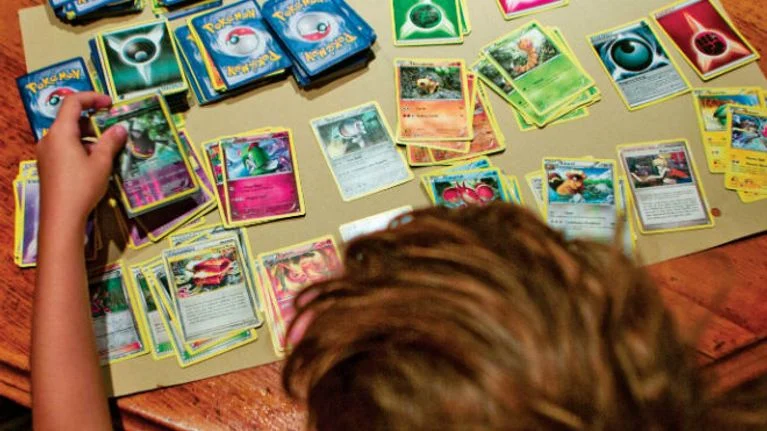
Walk into any local game store during an open play event, and you will witness two entirely different economies operating on the exact same felt mats. On one side sit seasoned collectors discussing centering, raw condition grades, and market trends. On the other side sit young fans trading based on visual flair, holographic foil patterns, and how much they love a specific character.
The collision of these two worlds has become common. Modern expansions contain individual chase cards worth several hundred dollars, and children pull them straight from supermarket blister packs every week. When an adult or seasoned collector sits across the table from a young player holding a significant asset, normal trade etiquette is no longer sufficient. Navigating these interactions requires an ethical framework rooted in transparency, patience, and genuine care for the hobby’s future.
The Modern Disconnect Between Value and Sentiment
For an experienced collector, card value is rooted in cold data: historical sales, rarity tiers, grading submission numbers, and liquid cash pricing. For a child, value is almost entirely emotional and sensory. A ten-year-old might treasure an alternate-art card featuring an iconic monster simply because the illustration looks exciting, entirely oblivious to the fact that adult buyers are paying three hundred dollars for that exact cardboard rectangle online.
This gap creates an immediate ethical imbalance. In collector circles, taking advantage of a naive player is known as sharking. While manipulating any novice is frowned upon, doing so against a child is outright predatory. The cardinal rule of trading with young collectors is recognizing that superior knowledge does not confer a right to exploit. If a transaction feels lopsided because the other party lacks the developmental maturity to understand financial markets, proceeding with that deal is a breach of community trust.
The Guardian Rule: Involving Parents from the Start
Before a single binder is examined or a card changes hands, identify who is supervising the child. If a trade involves cards carrying meaningful financial value, an adult guardian must be brought into the conversation immediately.
Never conduct a high-stakes trade in a corner while a parent is browsing down another aisle or waiting out in the car. Approach the parent politely, explain what card their child has, and clearly state what that card represents in the secondary market. Many parents assume Pokémon cards still cost roughly the same as they did decades ago, viewing them merely as five-dollar playthings.
When you bring a parent to the table, explain the dynamics clearly:
-
State the current market value of the child’s card based on real-time sales data.
-
Explain why the card commands that price, whether due to rarity, art style, or tournament viability.
-
Clarify what you are offering in return and verify that the parent understands the financial balance of the exchange.
Involving parents protects everyone involved. It eliminates the risk of buyer remorse, shields you from accusations of dishonesty, and ensures the family makes an informed decision about an item that belongs to their household.
The Trap of Quantity Over Quality
Children naturally evaluate trades through a lens of visual abundance. To a young collector, giving up one card to receive ten shiny cards can feel like an incredible victory. Less scrupulous hobbyists often exploit this cognitive tendency by dumping bulk ultra-rares, standard holo foils, or low-tier promotional cards in exchange for a single high-tier chase card.
Even if a child eagerly accepts such an arrangement, offering it remains unethical. Handing over five ten-dollar cards for a single two-hundred-dollar card is not a negotiation; it is exploitation masked as mutual agreement.
If a young collector expresses a desire for multiple cards rather than one expensive piece, you have an obligation to construct a trade that maintains proportional equity. Walk them through the math. Show them that while having more cards feels rewarding in the moment, their single card represents substantial trading power that should not be surrendered lightly.
Educating on Value and Preservation in Real Time
Trading sessions with kids present an opportunity for mentorship. Rather than keeping price verification behind your own phone screen, turn the device around and let the child look at the data with you.
Show them how to look up completed sales rather than inflated asking prices. Explain what near-mint condition means, and show them how corner dings, edge whitening, and surface scratches reduce liquidity. If their valuable card is floating loose in a pocket or jammed unsleeved into a rigid plastic binder, give them a penny sleeve and a top loader right there at the table.
Teaching a young collector how to protect their card builds their confidence and teaches them how to engage with the hobby responsibly. They learn that their possessions have tangible worth, that careful handling matters, and that the community is populated by adults who want to help them succeed rather than take their best pulls.
Knowing When to Walk Away
There are moments when the only ethical move is declining the trade altogether. If a child seems unsure, if they are trading a card gifted by a relative, or if they appear swayed solely by the excitement of the moment, step back.
Children frequently experience acute regret after parting with a card they spent months hunting. If you sense that the young collector is attached to the artwork or will wake up tomorrow morning upset that their favorite monster is gone, tell them to keep it. Advise them to sleep on the decision, talk it over with their family, and bring it back the following week if they still want to make the swap.
Walking away from an advantageous deal might feel counterintuitive to someone conditioned by aggressive secondary markets. However, local game stores and card leagues survive entirely on community goodwill. A child who feels respected and protected grows up to become an active, honorable participant in the hobby for decades to come.